





Magento has a reputation for being resource-heavy, and while some of that is inherent to running a full-featured enterprise commerce platform, a large share of slow Magento stores are running with caching layers misconfigured or entirely unused. Understanding what each caching layer actually does removes most of the guesswork from performance tuning. Magento’s Caching Layers […]
Read more
Magento to headless migration conversations tend to start reactively, usually after a specific frustration, a slow page load, a blocked feature request, or a scaling issue during peak sales, rather than as a planned strategic evaluation. This guide covers the concrete when to go headless commerce signals worth watching for, so CTOs and ecommerce managers […]
Read more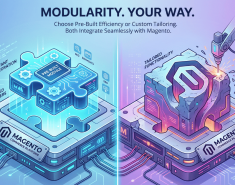
Every Magento store eventually needs functionality the platform does not offer out of the box, and the decision between building a custom extension or buying a third-party module gets made too often on gut feeling rather than a clear evaluation of the actual trade-offs involved. Getting this decision wrong either wastes development budget on something […]
Read more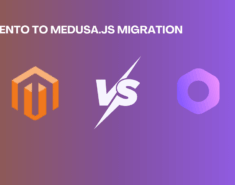
When Stability Is No Longer Enough For years, Magento has been a reliable backbone for complex eCommerce operations. Its ecosystem, feature depth, and extensibility have helped countless B2B and D2C brands grow beyond simple storefronts. Planning to move from Magento to Medusa.js?Our dedicated team at Askan Commerce helps businesses handle end-to-end migration — from data […]
Read more
Choosing an ecommerce platform today is no longer about ticking feature checklists. It’s about understanding how the platform behaves as your business grows, how flexible it is when requirements change, and how much technical overhead it adds over time. Two platforms that are often evaluated in this context are Magento and Medusa JS. Although both […]
Read more
What is Headless Commerce? The term headless commerce describes an architecture where the front-end (the “head”) of the e-commerce experience is decoupled from the back-end commerce engine. In other words, the customer-facing interface (web store, mobile app, smart kiosk, etc.) connects to the commerce services (catalogue, checkout, orders) via APIs. This enables brands to evolve […]
Read more
Magento 2.4.8, the latest release in the Magento 2 series, was launched in April 2025, bringing significant enhancements in performance, security, and future-ready tech compatibility. With over 140 bug fixes, PHP 8.3 support, and new integrations like OpenSearch and Valkey, this version helps online stores operate faster, safer, and smarter. Whether you’re planning to upgrade, […]
Read more
In today’s digital commerce arena, where over 2 billion people are expected to buy goods or services online, don’t you think e-commerce platforms are more than just marketplaces? They’re the epicenters of innovation and customer engagement. Among these, Magento has risen as a standout leader. But why, you might ask? With its unmatched flexibility and […]
Read more
What is wrong with the ecommerce content management system? A decade ago when CMS was introduced, it really changed the game. CMS helped stores to go online super fast around time. Developers find it very easy to develop online ecommerce websites with bliss. Most of the functions are inbuilt so just plug and play model […]
Read more
Disclaimer: Reading this article provides you answer for the below questions. How secure is your Magento site? How to patch your magenta website? Detailed step by step guideline to know how to patch Magento? The benefit of upgrading Magneto 2.0. How to restore a specific Magento patch? Obviously, you have invested enough money in building […]
Read more