



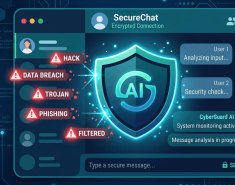
Every LLM powered feature shipped in the last two years shares one uncomfortable trait: the model reads instructions and data through the same channel. A traditional application keeps user input and executable code strictly separate, but a language model has no such wall. Whatever text reaches its context window can, in principle, be treated as […]
Read more
Every engineering roadmap in 2026 seems to mention AI agents production use cases somewhere on the slide. Vendors talk about autonomous coworkers, boardrooms talk about headcount savings, and most teams end up with a chatbot wrapped in a new name. The honest picture is more mixed. Some agentic workflows engineering teams have shipped are already […]
Read more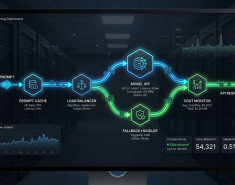
Integrating a large language model into a production system looked straightforward in 2023. Call the API, parse the response, ship it. Engineers who took that path and stayed on it have since learned, often through incidents and surprise billing statements, that production LLM integration is a distinct engineering discipline with its own failure modes, cost […]
Read more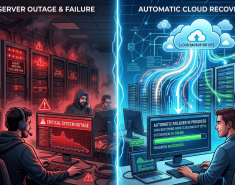
Disaster recovery is insurance you hope never to use. But when disasters strike (and they do), the difference between a good DR plan and a bad one is the difference between a 2-hour outage and a company-ending event. The statistics are sobering: 60% of companies that experience catastrophic data loss shut down within six months. […]
Read more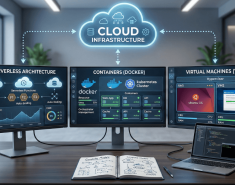
The compute model you choose affects everything: development velocity, operational complexity, scalability characteristics, and ultimately, your cloud bill. Pick wrong, and you’re either over-engineering simple applications or under-engineering complex ones. In 2026, enterprises have three primary compute options: traditional virtual machines (VMs), containerized applications running on Kubernetes or similar orchestrators, and serverless functions running on […]
Read more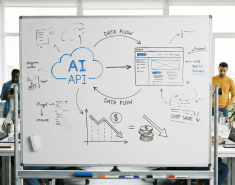
AI features have become table stakes for competitive web applications in 2026. Customers expect intelligent search, personalized recommendations, automated content generation, and smart assistance. But for product managers and CTOs at established companies, the question isn’t whether to add AI. It’s how to add AI features to existing applications without massive budgets, engineering rewrites, or […]
Read more
Quality assurance costs are spiraling out of control for enterprise software teams. Manual testing burns hours, automated tests break with every code change, and QA bottlenecks delay releases by weeks. For engineering directors and QA managers overseeing complex applications (web platforms, mobile apps, SaaS products), the pressure is constant: ship faster without sacrificing quality. It’s […]
Read more
The enterprise software development landscape has fundamentally shifted. What once took months now takes weeks, and the catalyst isn’t more developers, it’s AI coding assistants that amplify every engineer’s output. But as CTOs and engineering leaders evaluate AI pair programming tools in 2026, two platforms dominate the conversation: Cursor AI and GitHub Copilot. The stakes […]
Read more
Imagine having a virtual assistant that doesn’t just answer questions but understands your business needs, processes complex data, and provides insights that can drive your company forward. That’s where iAsk AI steps in. Businesses today are drowning in data, but making sense of it is what truly matters. iAsk AI isn’t just another AI, it’s […]
Read more
If your business relies on real-time data, you know the frustration! searching through outdated blog posts, clicking endless links, and still not getting the insights you need. What if there was a way to get instant, fact-checked, and reliable answers in a single search? That’s exactly what Perplexity AI delivers. At Askan Technologies, we help […]
Read more