




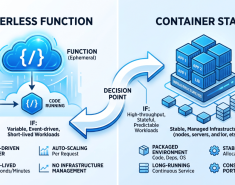
Every engineering team building on the cloud eventually runs into this question: should this workload run on serverless functions or inside containers. The answer used to be simpler when serverless meant tiny event handlers and containers meant everything else. In 2026 that line has blurred, with platforms offering serverless containers, container based functions, and orchestration […]
Read more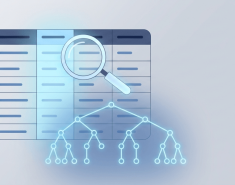
Most performance problems teams chase are not caused by underpowered servers or slow application code. They come from indexes that were added without thought, or never added at all. A single missing index can quietly turn a fast application into a sluggish one long before anyone notices it in the logs. If your team is […]
Read more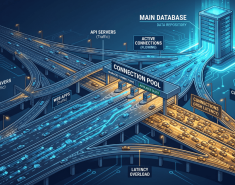
Connection pooling sits in a quiet corner of most backend architectures. It rarely appears in architecture diagrams, it generates no alerts until something goes badly wrong, and most engineers configure it once and never revisit it. That neglect is expensive. A misconfigured connection pool is one of the most common causes of database-related outages in […]
Read more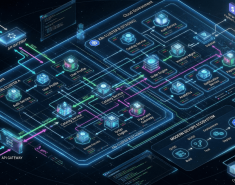
Choosing an API style is one of those decisions that compounds over time. Pick the wrong one and you end up fighting the framework every time the system grows. Pick the right one and the architecture scales cleanly as requirements change. In 2026, most microservices teams are working with at least two of these three: […]
Read more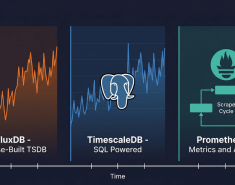
A temperature sensor on a factory floor records a reading every five seconds. A Kubernetes cluster emits thousands of metrics per minute from every pod, node, and container. A financial trading platform logs every price tick across hundreds of instruments simultaneously. Each of these workloads shares a common structure: a continuous stream of timestamped numerical […]
Read more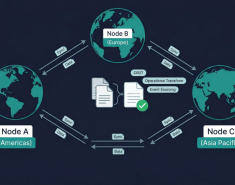
Two users open the same document from different continents. One adds a sentence at the top. The other deletes a paragraph in the middle. Both are offline for thirty seconds. When their connections restore, the application must merge both changes into a single coherent document without losing either user’s work and without asking either of […]
Read more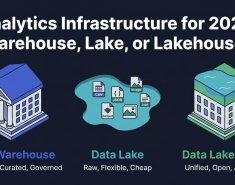
Every organization that generates data eventually faces a version of the same question: where should that data live so that the people and systems that need it can access it reliably, quickly, and without paying engineers to move it around constantly? The answer has changed significantly over the past fifteen years, and in 2026 it […]
Read more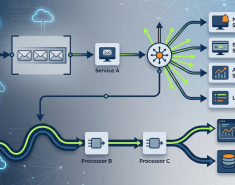
Synchronous request-response is the default communication model for most web applications. A service calls another service, waits for the response, and continues. At low traffic volumes and shallow service graphs this model works without visible friction. At scale, the friction becomes structural: a slow downstream service delays every caller. A service that is temporarily unavailable […]
Read more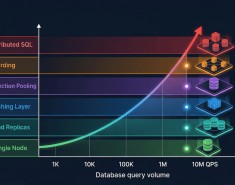
Most databases start their lives handling a few hundred queries per second against a schema designed in a weekend. The first thousand users arrive and nothing breaks. The first ten thousand users arrive and a few slow queries surface. By the time a hundred thousand concurrent users are active, the database that was fine last […]
Read more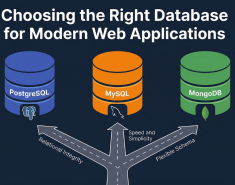
The database you choose for a web application is one of the most consequential architectural decisions your team will make. Unlike a framework or a deployment tool that can be swapped out incrementally over time, migrating a live production database is a high-risk, high-effort operation that most teams undertake only under real pain. Getting the […]
Read more