




TABLE OF CONTENTS
Prompt Injection and LLM Security: What Engineering Teams Must Defend Against

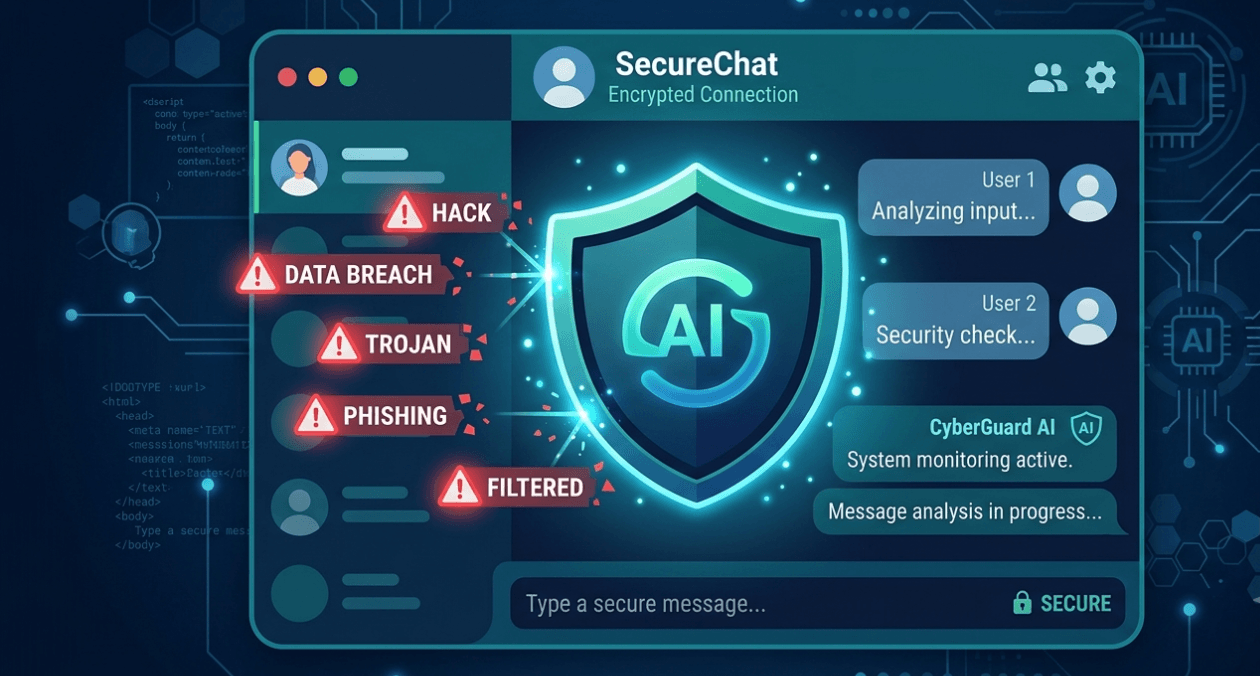
Every LLM powered feature shipped in the last two years shares one uncomfortable trait: the model reads instructions and data through the same channel. A traditional application keeps user input and executable code strictly separate, but a language model has no such wall. Whatever text reaches its context window can, in principle, be treated as an instruction, and that single design fact is the root of prompt injection, now consistently ranked as the top security risk for LLM applications by the OWASP Top 10 for LLM Applications.
For engineering teams shipping chatbots, coding assistants, or autonomous agents in 2026, prompt injection is no longer a theoretical concern raised in a research paper. It is a production risk that shows up the moment a model reads an email, a support ticket, or a web page on the user’s behalf. This guide covers how the attack works, where it tends to surface, and the practical controls that reduce exposure without stalling a release schedule.
Why Prompt Injection Is Different From Classic Injection Attacks
SQL injection and cross site scripting are solved problems with well understood fixes: parameterize the query, escape the output, done. Prompt injection resists that kind of clean fix because there is no reliable syntactic marker that separates an instruction from data inside natural language. An attacker does not need special characters or a broken sanitizer. A plain sentence hidden inside a document, such as one instructing the model to ignore its previous rules, can be enough if the model treats retrieved content as trustworthy.
This is why the defenses that work for LLM applications look less like input validation and more like access control. The question shifts from “is this input malformed” to “what is this model allowed to do even if it gets fooled”.
Direct vs Indirect Prompt Injection
Direct injection happens when a user types an instruction straight into the chat interface, attempting to override the system prompt. It is the easier of the two to catch, since the attacker is the same party interacting with the application and the traffic is visible in logs. Indirect injection is the harder problem: the malicious instruction arrives embedded in content the model was asked to summarize, browse, or process on someone else’s behalf, such as a webpage, a PDF attachment, or a third party API response.
| Attack Type | Typical Entry Point |
|---|---|
| Direct injection | Chat input, form fields, user prompts |
| Indirect injection | Retrieved documents, emails, scraped web pages |
Indirect injection is what makes agentic workflows riskier than a simple chatbot. Once a model is wired to tools that can send emails, write files, or call internal APIs, an attacker who can influence any piece of content the agent reads gains a path toward influencing what the agent does next.
Where LLM Applications Are Most Exposed
Retrieval augmented generation pipelines are a common exposure point, since a poisoned document sitting inside a vector store can get pulled into context for an unrelated query. Customer support bots that summarize inbound tickets are another, because the ticket text itself becomes untrusted input the moment it reaches the model. Coding assistants that read repository files or pull request comments carry similar risk, since a comment crafted to look like a legitimate instruction can end up influencing generated code or automated actions.
The common thread across all three is that the model cannot tell the difference between content it should describe and content it should obey. Any workflow where the model has both read access to external content and write access to a consequential action deserves the closest scrutiny.
Defense in Depth: Practical Controls Engineering Teams Can Apply
No single control eliminates prompt injection, which is why the practical guidance from the security community consistently points toward layered defenses rather than a silver bullet fix.
| Defense Layer | What It Does |
|---|---|
| Least privilege tooling | Limits what actions a model can trigger even if manipulated |
| Output filtering | Screens generated actions before they execute |
| Human approval gates | Requires sign off for high risk or irreversible steps |
Segregating untrusted content from system instructions at the prompt construction level, tagging retrieved data clearly rather than concatenating it into the same block as instructions, also reduces how often a model treats external text as authoritative. None of these controls are new ideas in security engineering, they are the same least privilege and defense in depth principles applied to a new kind of input channel.
Sandboxing and Isolating Agent Actions
One of the more effective architectural patterns for limiting the blast radius of a successful injection is to run the agent’s actions inside a sandboxed execution layer rather than granting it direct access to production systems. A coding assistant that can run shell commands, for instance, is far safer when those commands execute inside a disposable container with no access to real credentials than when they run directly against a developer’s machine. The same principle applies to agents that call internal APIs: routing every call through a proxy that enforces scoped, short lived tokens means that even if an attacker manages to manipulate the model into attempting an unauthorized action, the underlying permission layer blocks it regardless of what the model believes it is allowed to do.
This is also where monitoring earns its keep. Logging every tool call an agent makes, along with the context that triggered it, gives a security team the ability to trace back an unexpected action to the specific piece of content that caused it. Without that trail, a successful injection can go unnoticed for weeks, since the symptom is often a subtly wrong output rather than an obvious crash.
System Prompt Leakage and Why It Matters
A closely related risk is system prompt leakage, where an attacker manipulates the model into revealing its own instructions, internal tool definitions, or configuration details. On its own, this might seem like a minor information disclosure issue, but a leaked system prompt often hands an attacker the exact wording needed to craft a more effective injection on a follow up attempt, since they now know precisely which phrases the model has been told to treat as authoritative. Teams that treat their system prompt as sensitive configuration, rather than disposable boilerplate, tend to design fallback behavior for the case where a user asks the model to repeat or summarize its own instructions, rather than assuming the model will refuse on its own.
Testing and Red Teaming Before Production
Because prompt injection cannot be patched away, testing has to be ongoing rather than a one time checklist item before launch. Teams that take this seriously build adversarial test suites that specifically try to break the system prompt boundary, simulate poisoned documents in the retrieval pipeline, and probe what happens when a tool call is one step removed from user intent. Running these tests as part of the normal CI pipeline, not just before a major release, catches regressions introduced by prompt changes or new tool integrations.
A practical starting point for teams new to this kind of testing is to maintain a small library of known injection patterns, drawn from public research and from OWASP’s own documentation, and run the full application against that library any time the system prompt, retrieval source, or tool set changes. This is not a one time certification exercise, since new attack patterns surface regularly and a suite built a year ago will miss techniques discovered since. Pairing automated regression tests with periodic manual red teaming, where a security engineer deliberately tries to break the boundary using creative phrasing a scripted test would not think to try, tends to catch the issues that pattern matching alone misses.
Teams building agentic products with an AI focused engineering partner tend to bake this red teaming step into the same sprint cadence as feature work, rather than treating it as a separate audit that happens once a year. Given how quickly the attack surface changes as new tools and integrations get added, that ongoing rhythm ends up mattering more than any single control on its own. Engineering teams that treat prompt injection as an architecture question from day one, rather than a bug to fix after an incident, are the ones that end up shipping AI features their security team is comfortable signing off on.
Most popular pages
-

Choosing Between REST and GraphQL for Your Next API
REST and GraphQL both solve the same underlying problem, letting a frontend fetch and modify data from a backend, but they approach it with...
-
Magento to Headless: Signs Your Store Has Outgrown Monolith
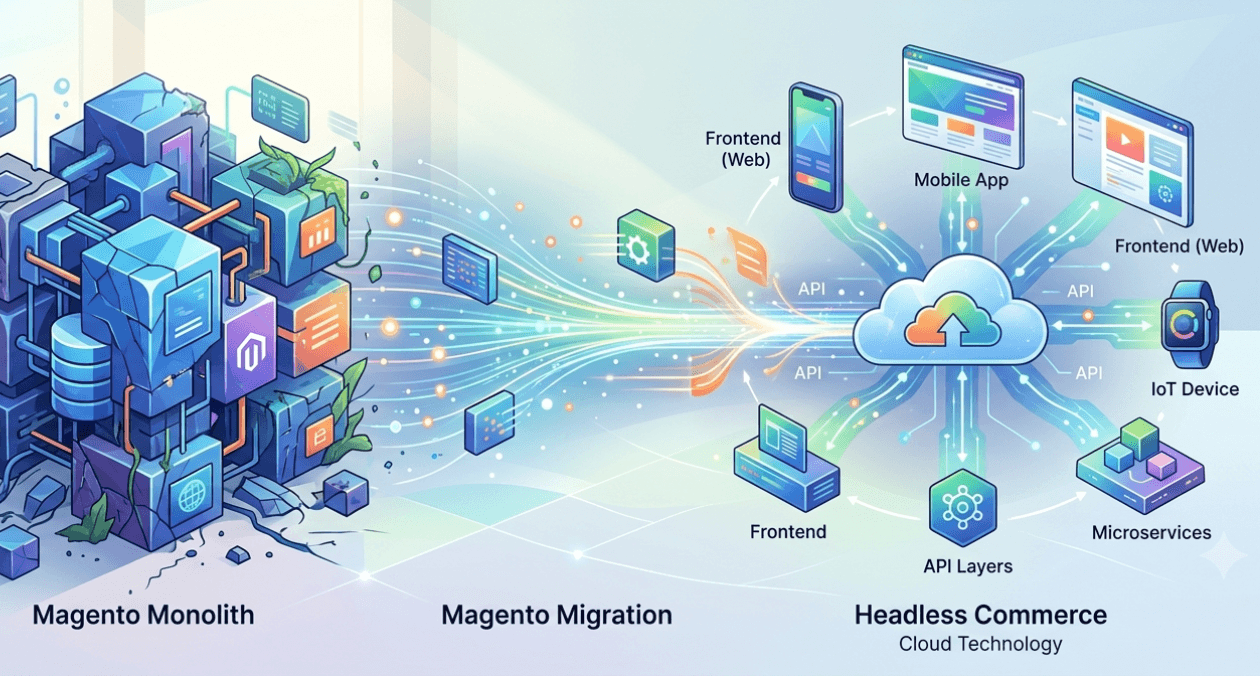
Magento to headless migration conversations tend to start reactively, usually after a specific frustration, a slow page load, a blocked feature request, or a...
-

AMP Pages in 2026: Is It Still Worth Implementing
The question of is amp still worth it 2026 comes up regularly from publishers and SEO teams who adopted AMP years ago and are...
Choosing Between REST and GraphQL for Your Next API
REST and GraphQL both solve the same underlying problem, letting a frontend fetch and modify data from a backend, but they approach it with...
Magento to Headless: Signs Your Store Has Outgrown Monolith
Magento to headless migration conversations tend to start reactively, usually after a specific frustration, a slow page load, a blocked feature request, or a...
AMP Pages in 2026: Is It Still Worth Implementing
The question of is amp still worth it 2026 comes up regularly from publishers and SEO teams who adopted AMP years ago and are...