



TABLE OF CONTENTS
AI-Assisted Code Review: What Works, What Does Not, and How Teams Are Adapting

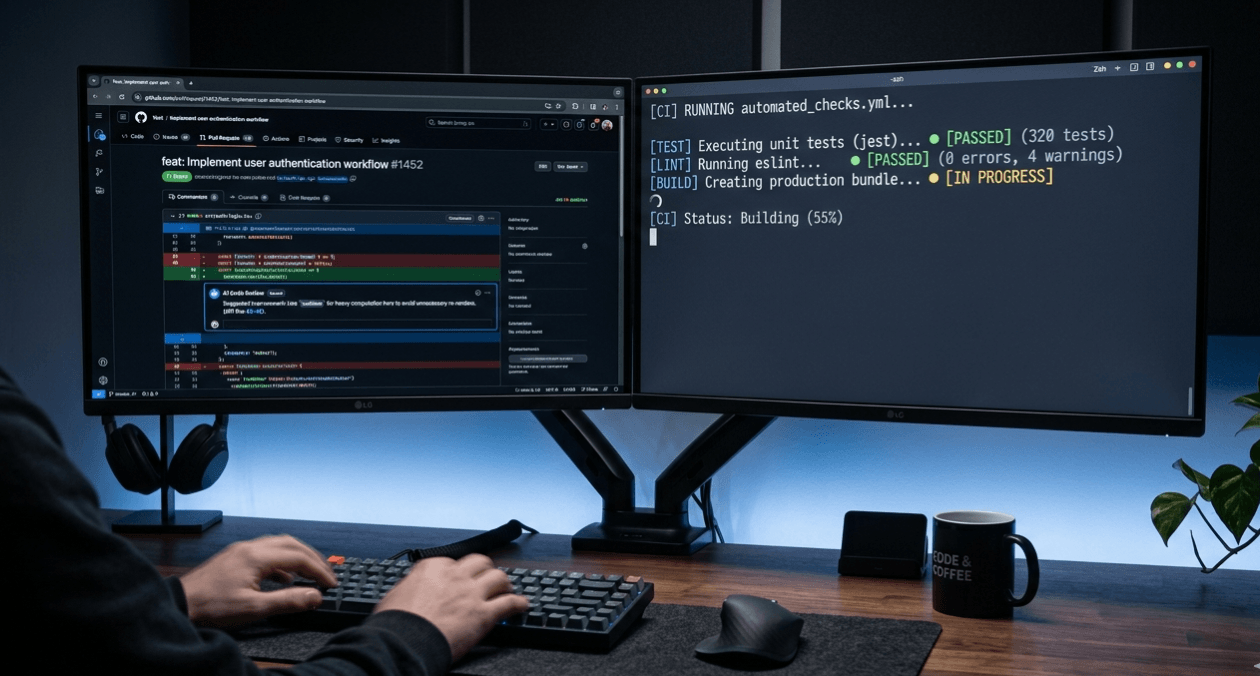
AI tools have moved quickly from experimental additions into everyday developer workflows. Code review, which has always been one of the most time-consuming parts of the software delivery cycle, is one of the areas where the impact is most visible. Tools like GitHub Copilot, Amazon CodeGuru, and a growing range of purpose-built review assistants are now capable of scanning pull requests, flagging issues, and suggesting changes in seconds.
But capability and usefulness are different things. The engineering teams that have gotten the most out of AI-assisted code review are not the ones that turned it on and left it to run. They are the ones that treated it as a tool requiring deliberate configuration, clear scope, and ongoing calibration. This article covers what those teams have learned.
At Askan Technologies, integrating AI tooling into engineering workflows is something we work through with the teams we support, and the patterns here reflect what actually plays out in practice rather than what the product demos suggest.
What AI Code Review Tools Actually Do Well
The most effective use cases for AI in code review cluster around two categories: pattern recognition at scale and consistency enforcement. These are areas where human reviewers are genuinely limited by cognitive bandwidth, and where AI has a meaningful structural advantage.
Catching Common Bug Patterns
AI tools trained on large codebases can reliably flag issues like null pointer dereferences, off-by-one errors, unused variables, unclosed resources, and common security vulnerabilities such as SQL injection patterns or hardcoded credentials. These are the categories of issues that experienced developers know to look for but sometimes miss under time pressure.
The value here is not that AI catches things humans cannot. It is that AI catches them every single time, on every PR, without fatigue. A reviewer who has already looked at seven pull requests that morning is statistically more likely to miss a subtle null check than one who is fresh. AI does not have that problem.
Enforcing Style and Convention
Arguing about naming conventions, import ordering, and comment formatting in code review is a waste of senior engineer time. AI tools configured against a team’s linting rules and style guides can handle this layer automatically, leaving human reviewers free to focus on architecture, logic correctness, and design decisions that actually benefit from human judgement.
Teams that have offloaded style enforcement to AI tools consistently report that their review cycles feel less adversarial and more substantive. Reviewers spend less time pointing out that a variable name should be camelCase and more time discussing whether the abstraction is right.
Documentation and Test Coverage Prompts
Several AI review tools can identify functions or modules that lack test coverage and prompt contributors to add tests before merge. They can also flag public functions without docstrings and suggest documentation stubs. Neither of these requires deep intelligence. Both require consistent attention that is easy to sustain with automation and easy to miss without it.
Integrate AI tools into your dev workflow
Where AI Code Review Falls Short
The teams that have had disappointing results with AI review tools share a common pattern: they over-delegated. They expected AI to replace the judgment layer of code review rather than augment the pattern-detection layer. These are different jobs, and confusing them creates real problems.
| AI Review Handles Well | Requires Human Reviewer |
| Syntax and linting violations | Architectural trade-offs and design decisions |
| Common security vulnerability patterns | Context-specific security risks unique to your domain |
| Missing test coverage signals | Whether the tests being written actually test the right things |
| Duplicate or dead code detection | Whether refactoring now vs later is the right call |
Context-Blindness in Business Logic
AI tools do not understand your product. They do not know that a particular edge case in your payment flow has a legal implication, or that the way a specific customer segment uses a feature makes a seemingly innocuous change actually breaking. This domain context lives in the heads of your engineers and product team, and no amount of fine-tuning on your codebase will transfer it to a model reliably.
Code that passes every automated check and looks syntactically clean can still be deeply wrong from a product perspective. Human reviewers who understand the business context are the only reliable check for this layer.
False Positive Fatigue
Out-of-the-box AI review tools are often configured with broad sensitivity, which means they flag a lot of things that are not actually problems in the context of your codebase. When developers start seeing repeated false positives, they do one of two things: they begin ignoring all AI comments without reading them, or they spend time arguing with the tool in PR threads. Both outcomes are worse than not using the tool at all. Research from Google’s engineering productivity team has documented how alert fatigue in automated systems consistently degrades the signal-to-noise ratio that makes automation valuable in the first place.
How Teams Are Adapting Their Review Workflows
The engineering teams getting real value from AI code review have stopped thinking about it as a product feature to switch on and started treating it as a process that requires configuration, iteration, and ongoing ownership.
Starting with a Narrow Scope
Rather than enabling AI review across all repositories and all PR types at once, effective teams start with a single category. Security vulnerability detection is a common starting point because the stakes are clear, the patterns are well-established, and false positives in this category are less likely to create friction.
Once engineers have calibrated the tool against their codebase and trust the signal in that category, they expand scope. This gradual adoption builds confidence in the tool without creating the immediate false-positive fatigue that comes from enabling everything at once.
Treating AI Suggestions as First Draft, Not Final Verdict
The framing matters. Teams that position AI review as a first-pass filter that surfaces candidates for human attention see better outcomes than those that position it as an authoritative reviewer whose suggestions carry default weight.
When developers know that an AI flag is a prompt to investigate rather than a directive to comply, they engage with it more thoughtfully. When they feel compelled to either act on every flag or explicitly dismiss it, they become resentful and the tool loses usefulness.
Building Feedback Loops into the Configuration
The best AI review setups include a mechanism for developers to mark feedback as not applicable with a reason. Over time, these rejections should feed back into the tool’s configuration, either through explicit rule suppression or through model fine-tuning if the platform supports it.
Without this feedback loop, the tool stays at its out-of-the-box sensitivity indefinitely, continuing to produce false positives that erode trust. With it, the signal quality improves over time and the tool becomes more genuinely useful as the codebase and team evolve.
Talk to us about engineering tooling
The Role of Senior Engineers in an AI-Augmented Review Process
A concern that surfaces regularly when teams adopt AI review tools is whether senior engineers become less essential. The actual pattern in teams that have run these tools for more than six months is the opposite.
When AI handles the pattern-detection and consistency layer, senior engineers are freed from commenting on the same recurring issues repeatedly. Their review time shifts toward the aspects that genuinely require their experience: evaluating architectural choices, assessing whether a solution is appropriately simple or over-engineered, identifying coupling that will cause problems six months from now, and asking the product-context questions that no automated tool can ask.
This is consistent with how Askan Technologies approaches engineering practice across the projects it supports. AI tooling raises the floor of code quality by automating the routine. It does not replace the ceiling of engineering judgement that comes from senior engineers who understand both the system and the product context deeply.
Practical Configuration Decisions That Determine Outcome
The gap between AI review tools that help and ones that frustrate usually comes down to a handful of configuration decisions that teams get right or wrong at setup.
| Configuration Decision | Better Approach |
| Enable all rule categories at once | Start with two or three high-value categories only |
| Block PR merge on any AI flag | Use flags as advisory signals, not hard blockers initially |
| Apply same config to all repos | Tune separately per repository based on codebase maturity |
| Never review AI output | Schedule monthly review of false positive rate and rule relevance |
- Review your false positive rate monthly and suppress rules where rejection rate exceeds 60 percent
- Document which categories your team trusts from the AI and which still require mandatory human review
- Create an explicit onboarding note in your PR template explaining how to interpret AI review comments
- Assign a rotating owner for AI tooling configuration so calibration does not drift as the codebase evolves
The teams that invest this level of operational discipline in their AI review setup consistently report that the tools earn back that investment within the first quarter through reduced review cycle times and fewer late-stage bug discoveries.
What the Next Twelve Months Look Like for AI Code Review
The capability curve for AI code review tools is moving fast. The current generation handles static analysis well and is improving at detecting logical errors within bounded function scope. The next generation is beginning to handle cross-file context, which is where the most consequential bugs typically live.
For engineering teams, the implication is that the workflow adaptations worth investing in now are the ones that will scale as the tools get more capable. Building the habit of treating AI review as a first-pass filter, creating feedback loops that improve signal quality over time, and preserving the senior engineering time that becomes available for higher-order review are investments that compound regardless of which specific tool your team is using.
Most popular pages
-

Image Optimization for Web Performance: Formats and Compression
Ask a developer why a page feels slow, and the honest answer is often sitting right in the middle of it. A single unoptimised...
-

Monolith vs Microservices: Choosing the Right Architecture for Your Team
Microservices have dominated architecture conversations for years, to the point where choosing a monolith can feel like admitting you're behind the times. In practice,...
-
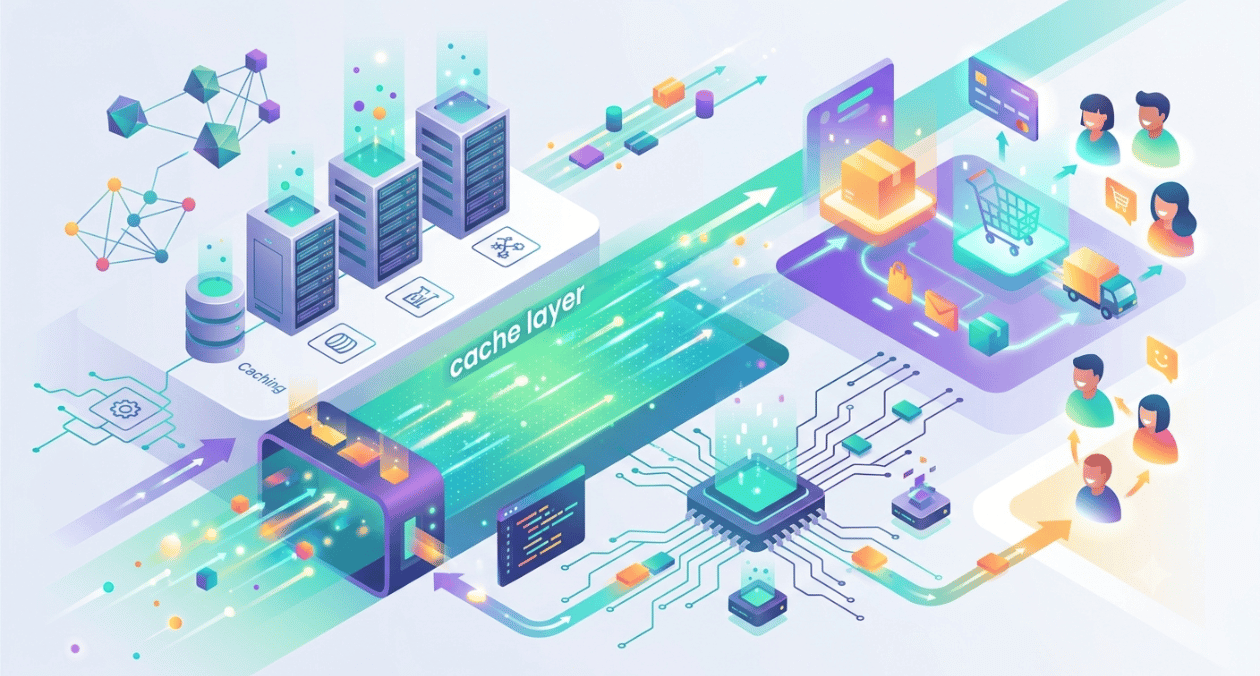
Magento Performance Tuning: Caching Layers Explained
Magento has a reputation for being resource-heavy, and while some of that is inherent to running a full-featured enterprise commerce platform, a large share...
Image Optimization for Web Performance: Formats and Compression
Ask a developer why a page feels slow, and the honest answer is often sitting right in the middle of it. A single unoptimised...
Monolith vs Microservices: Choosing the Right Architecture for Your Team
Microservices have dominated architecture conversations for years, to the point where choosing a monolith can feel like admitting you're behind the times. In practice,...
Magento Performance Tuning: Caching Layers Explained
Magento has a reputation for being resource-heavy, and while some of that is inherent to running a full-featured enterprise commerce platform, a large share...