



TABLE OF CONTENTS
The Complete Guide to AI-Assisted Testing: Playwright, Cypress, and the Future of QA

Quality assurance costs are spiraling out of control for enterprise software teams. Manual testing burns hours, automated tests break with every code change, and QA bottlenecks delay releases by weeks.
For engineering directors and QA managers overseeing complex applications (web platforms, mobile apps, SaaS products), the pressure is constant: ship faster without sacrificing quality. It’s a contradiction that traditional testing approaches can’t resolve.
The solution emerging in 2026: AI-assisted testing that combines modern automation frameworks (Playwright, Cypress) with artificial intelligence to write tests, maintain them, and even predict which features are most likely to break.
At Askan Technologies, led by our Chief Quality Officer Rajthilak Rajendirababu (18+ years in quality assurance), we’ve implemented AI-assisted testing across 60+ enterprise projects over the past 24 months. These aren’t toy examples. We’re testing applications processing millions in transactions, serving 100K+ users, and operating in regulated industries (fintech, healthcare, eCommerce) across US, UK, Australia, and Canada markets.
The results: 60% reduction in test maintenance time, 45% faster test creation, and 35% improvement in bug detection compared to traditional automated testing approaches.
This isn’t theoretical. It’s production data from teams shipping critical software every day.
The Enterprise Testing Crisis
Before exploring AI solutions, let’s acknowledge why testing has become unsustainable.
The Cost of Quality Assurance
For a typical enterprise application with 200+ features and 50K lines of code:
Traditional QA approach:
- Manual testing: 120 hours per release cycle
- Automated test writing: 200 hours initial, 40 hours per sprint maintenance
- Regression testing: 60 hours per release
- Bug verification: 80 hours per release
- Total: 500+ hours per major release
At $80/hour for QA engineers, that’s $40,000 per release. For teams shipping monthly, that’s $480,000 annually just for testing.
The Automation Maintenance Trap
Teams adopted test automation to reduce manual testing costs. The promise: write tests once, run them forever.
The reality: automated tests break constantly.
Why automated tests fail:
- UI changes (button moved, ID changed, class name updated)
- Timing issues (page loads slower than expected)
- Test data problems (expected data not in database)
- Environment flakiness (network timeouts, third-party API issues)
- Dependency updates (framework upgrades break existing tests)
Real data from our projects:
| Test Suite Size | Weekly Failures | Maintenance Time | Maintenance Cost |
| 500 tests | 35-60 failures | 12 hours/week | $49,920/year |
| 1,000 tests | 70-120 failures | 24 hours/week | $99,840/year |
| 2,500 tests | 180-300 failures | 60 hours/week | $249,600/year |
The trap: You invest heavily in automation, then spend nearly as much maintaining the tests as you would have spent on manual testing.
The Coverage vs Speed Dilemma
Engineering leaders face impossible choices:
Option 1: Comprehensive testing (test everything, ship slowly)
- Release cycles: 4-6 weeks
- Market responsiveness: Poor
- Competitive disadvantage: High
Option 2: Fast shipping (test minimally, ship fast)
- Release cycles: 1-2 weeks
- Bug risk: High
- Customer satisfaction: Suffers
Option 3: AI-assisted testing (test thoroughly, ship fast)
- Release cycles: 1-2 weeks
- Bug risk: Low
- Best of both worlds
This is why AI-assisted testing matters.
Playwright vs Cypress: The Foundation Platforms
Before layering AI on top, let’s compare the two dominant testing frameworks.
Playwright: The Multi-Browser Powerhouse
Developed by Microsoft, Playwright is the newer framework (2020) built to address Selenium’s limitations.
Core strengths:
- Multi-browser support (Chromium, Firefox, WebKit) with single codebase
- Auto-wait functionality (waits for elements to be ready before interacting)
- Network interception (mock API responses, test offline scenarios)
- Parallel execution (run tests across multiple browsers simultaneously)
- Mobile emulation (test responsive designs without physical devices)
Best for:
- Cross-browser compatibility testing
- Complex single-page applications (SPAs)
- Applications with heavy async operations
- Teams needing detailed debugging capabilities
Performance profile:
- Test execution speed: Very fast (parallel by default)
- Setup complexity: Medium (requires Node.js knowledge)
- Learning curve: Moderate (good documentation)
Cypress: The Developer-Friendly Choice
Cypress launched in 2017 as a developer-first testing framework with real-time feedback.
Core strengths:
- Real-time test runner (watch tests execute in browser)
- Automatic waiting (no manual sleep/wait commands needed)
- Time-travel debugging (see what happened at each step)
- Network stubbing (control API responses easily)
- Screenshots and videos (automatic capture on failure)
Best for:
- Frontend-heavy applications (React, Vue, Angular)
- Developer-written tests (developers write tests alongside code)
- Teams wanting fast feedback loops
- Projects prioritizing DX (developer experience)
Performance profile:
- Test execution speed: Fast (but single-threaded by default)
- Setup complexity: Low (easiest to get started)
- Learning curve: Gentle (excellent documentation and community)
Head-to-Head Comparison
| Feature | Playwright | Cypress |
| Browser support | Chrome, Firefox, Safari | Chrome, Firefox, Edge (Safari limited) |
| Parallel execution | Built-in | Requires paid plan |
| Auto-waiting | Yes | Yes |
| Mobile testing | Excellent | Good |
| Network stubbing | Advanced | Good |
| Test speed | Very fast | Fast |
| Learning curve | Moderate | Easy |
| Community size | Growing rapidly | Large, established |
| Enterprise features | Strong | Very strong |
The verdict: Both are excellent. Playwright wins for cross-browser needs and complex scenarios. Cypress wins for ease of use and developer adoption.
How AI Transforms Test Automation
AI doesn’t replace Playwright or Cypress. It augments them in three critical ways:
1. Intelligent Test Generation
Traditional approach: Developers manually write test scripts describing every interaction (click this button, type in this field, verify this text appears).
AI approach: Record user interactions or describe test scenarios in natural language. AI generates complete test code.
Example scenario: Testing a login flow
Manual test writing time: 45 minutes per test case (happy path, wrong password, missing fields, account locked)
AI-assisted writing time: 8 minutes (describe scenario, AI generates test, developer reviews)
Time savings: 82%
How it works: AI tools analyze your application structure, understand common patterns (forms, navigation, data tables), and generate tests that follow best practices for the framework you’re using.
2. Self-Healing Tests
Traditional approach: When UI changes (button ID changed from “submit-btn” to “submit-button”), tests break. Developer manually updates every affected test.
AI approach: When a test fails due to UI changes, AI automatically identifies the new selector and updates the test code.
Real example from our projects:
A client redesigned their checkout flow. Traditional impact: 47 tests broke, requiring 6 hours to manually update selectors and verify fixes.
With AI self-healing: 43 tests auto-healed immediately, 4 required human verification (genuine bugs found), total time: 35 minutes.
Maintenance time reduction: 90%
3. Predictive Test Selection
Traditional approach: Run entire test suite on every commit (slow) or run minimal tests and risk missing bugs (risky).
AI approach: Analyze code changes and predict which tests are most likely to catch bugs. Run those tests first.
Impact: A 2,500-test suite that takes 45 minutes to run completely can be intelligently filtered to 300 high-priority tests running in 6 minutes, catching 94% of bugs that would have been found in the full run.
Efficiency gain: 87% faster feedback while maintaining high bug detection.
Real-World Implementation: Enterprise Case Studies
Case Study 1: FinTech Payment Platform
Client profile:
- Industry: Financial services
- Application: Payment processing dashboard
- Users: 50K+ business customers
- Regulatory requirements: SOC 2, PCI DSS compliance
- Testing mandate: Zero tolerance for payment bugs
Challenge: Manual testing taking 180 hours per release. Automated test suite (1,200 tests in Cypress) experiencing 90-110 failures per week from UI changes. QA bottleneck delaying releases by 2-3 weeks.
Solution implemented: Migrated to Playwright for better cross-browser coverage. Integrated AI test generation for new features. Implemented AI self-healing for UI change resilience. Added predictive test selection for faster feedback.
Results after 6 months:
| Metric | Before AI | After AI | Improvement |
| Test suite size | 1,200 tests | 2,400 tests | 100% increase |
| Test maintenance hours/week | 18 hours | 4 hours | 78% reduction |
| False positive rate | 8.5% | 2.1% | 75% reduction |
| Bug escape rate | 3.2% | 1.4% | 56% reduction |
| Release cycle time | 6 weeks | 2 weeks | 67% faster |
Cost impact:
- QA labor cost reduction: $156,000/year
- Faster time-to-market value: $420,000 (captured market opportunities)
- AI tooling cost: $12,000/year
- Net benefit: $564,000 annually
Case Study 2: Healthcare SaaS Platform
Client profile:
- Industry: Healthcare technology
- Application: Patient management system
- Users: 200+ hospitals, 10K+ providers
- Compliance: HIPAA, data security critical
- Testing challenge: Complex workflows with 300+ user paths
Challenge: Test coverage at only 45% due to time constraints. Manual regression testing consuming 240 hours per release. Critical bugs escaping to production monthly.
Solution implemented: Implemented Playwright for comprehensive coverage. Used AI to generate tests for untested workflows. Applied AI-powered visual regression testing. Automated accessibility compliance testing.
Results after 8 months:
| Metric | Before AI | After AI | Improvement |
| Test coverage | 45% | 87% | 93% increase |
| Manual testing hours | 240/release | 60/release | 75% reduction |
| Production bugs | 8.2/month | 2.1/month | 74% reduction |
| HIPAA audit findings | 4/year | 0/year | 100% reduction |
| QA team size | 6 engineers | 4 engineers | 33% reduction |
Cost impact:
- QA labor savings: $240,000/year
- Avoided HIPAA penalties: Immeasurable (fines range $100K to $1.5M)
- Customer satisfaction improvement: 23% (fewer production issues)
- ROI: 1,200% in first year
Case Study 3: eCommerce Platform
Client profile:
- Industry: Retail eCommerce
- Revenue: $45M annually
- SKUs: 15,000 products
- Traffic: 200K monthly visitors
- Critical flows: Product search, checkout, payment processing
Challenge: Seasonal spikes (Black Friday, holiday shopping) causing site crashes. Manual load testing insufficient. Performance bugs discovered by customers, not QA.
Solution implemented: Playwright for functional testing. AI-generated performance tests based on real user behavior patterns. Predictive analytics identifying bottlenecks before releases. Automated visual regression for product pages.
Results during holiday season:
| Metric | Previous Year | With AI Testing | Improvement |
| Site downtime | 4.2 hours | 0 hours | 100% uptime |
| Cart abandonment | 68% | 52% | 24% improvement |
| Page load time | 3.8s | 1.2s | 68% faster |
| Revenue lost to bugs | $280K | $18K | 94% reduction |
ROI calculation:
- Additional revenue captured: $262,000 (reduced cart abandonment)
- Avoided downtime losses: $420,000
- Testing cost: $28,000 (tools + implementation)
- Net benefit: $654,000 in one quarter
AI Testing Tools and Platforms
Several AI-powered testing platforms have emerged to augment Playwright and Cypress.
Leading AI Testing Solutions
Testim: AI-powered test automation with self-healing capabilities. Integrates with Selenium, Cypress, and Playwright. Strong visual testing features.
Mabl: Low-code test automation with AI-driven insights. Excellent for teams with limited coding experience. Built-in performance and accessibility testing.
Applitools: AI-powered visual testing (detect UI bugs invisible to code-based tests). Cross-browser and cross-device visual validation. Integrates with all major frameworks.
Functionize: Natural language test creation. AI maintains tests automatically. Predictive analytics for test optimization.
Sauce Labs: Cloud-based testing infrastructure with AI test orchestration. Parallel execution across thousands of browser/device combinations. Real device testing for mobile apps.
Cost Comparison
| Platform | Pricing Model | Best For | Annual Cost (10 users) |
| Testim | Per user | Teams needing self-healing | $24,000 |
| Mabl | Per user | Low-code preference | $30,000 |
| Applitools | Per checkpoint | Visual testing focus | $18,000 |
| Functionize | Per user | Natural language tests | $36,000 |
| Sauce Labs | Concurrent tests | Multi-device coverage | $42,000 |
Open-source alternatives: Playwright and Cypress offer AI integrations through plugins (lower cost but require more setup).
Implementation Roadmap: 12-Week Plan
Based on successful rollouts across 60+ projects, here’s our proven approach:
Weeks 1-2: Assessment and Planning
Activities:
- Audit current test coverage (what’s tested, what’s not)
- Identify testing pain points (flaky tests, maintenance burden, slow execution)
- Select framework (Playwright vs Cypress based on needs)
- Choose AI platform (based on team skills and budget)
- Define success metrics (coverage %, maintenance time, bug escape rate)
Deliverable: Testing strategy document with tool selections and ROI projections.
Weeks 3-4: Foundation Setup
Activities:
- Install chosen framework (Playwright or Cypress)
- Configure CI/CD integration (run tests on every commit)
- Set up test environments (staging, QA)
- Create test data management strategy
- Train team on framework basics (2-day workshop)
Deliverable: Working test infrastructure with first 10 tests running.
Weeks 5-7: AI Integration and Test Generation
Activities:
- Integrate AI testing platform with framework
- Generate tests for critical user flows (login, checkout, core features)
- Configure self-healing rules (when to auto-fix, when to alert)
- Set up visual regression testing
- Implement accessibility checks
Deliverable: 100+ AI-generated tests covering top user journeys.
Weeks 8-9: Test Expansion and Optimization
Activities:
- Generate tests for remaining features (comprehensive coverage)
- Optimize test execution (parallel runs, smart test selection)
- Configure reporting dashboards (real-time test results)
- Set up failure notifications (Slack, email, PagerDuty)
- Document test maintenance procedures
Deliverable: 500+ tests with 70%+ code coverage.
Weeks 10-11: Team Enablement
Activities:
- Train developers to write tests (shift-left approach)
- Train QA team on AI tool features
- Establish test writing standards
- Create test pattern library (reusable components)
- Set up peer review process for tests
Deliverable: Self-sufficient team capable of maintaining and expanding test suite.
Week 12: Measurement and Iteration
Activities:
- Measure against baseline metrics (coverage, speed, bug detection)
- Calculate ROI (time saved, bugs prevented, cost reduction)
- Identify improvement opportunities
- Plan next quarter enhancements
- Document lessons learned
Deliverable: ROI report and continuous improvement plan.
Common Implementation Challenges
Challenge 1: Test Flakiness
Problem: Tests pass sometimes, fail other times with no code changes.
Causes: Timing issues, network latency, test data inconsistency, environment variability.
AI solution: Predictive retry logic (AI learns which tests are flaky and automatically retries with adjusted timeouts), root cause analysis (AI identifies patterns in failures to suggest permanent fixes).
Challenge 2: Test Data Management
Problem: Tests fail because expected data isn’t in database.
Traditional solution: Manual test data creation before each test run (time-consuming, error-prone).
AI solution: Synthetic test data generation (AI creates realistic test data based on schema analysis), data state restoration (AI snapshots and restores database state between tests).
Challenge 3: Over-Reliance on AI
Problem: Teams blindly trust AI-generated tests without review.
Risk: AI can generate syntactically correct tests that don’t actually validate business logic properly.
Mitigation: Always human review AI-generated tests, verify tests actually fail when they should (mutate code to check test sensitivity), maintain test quality standards (coverage, assertions, readability).
ROI Calculation Framework
To justify AI testing investment to your CFO, use this framework:
Cost Savings
QA labor hours saved:
- Current test maintenance: X hours/week
- After AI: Y hours/week
- Savings: (X – Y) hours/week × $80/hour × 52 weeks
Example: 20 hours/week saved = $83,200/year
Faster releases:
- Current release cycle: X weeks
- After AI: Y weeks
- Additional releases/year: (52/Y) – (52/X)
- Revenue per release: $Z
- Additional revenue: Extra releases × $Z
Example: Ship 8 more releases/year at $50K revenue per release = $400,000
Bug prevention:
- Production bugs/year before: X
- Production bugs/year after: Y
- Cost per production bug: $Z (incident response, customer support, reputation damage)
- Savings: (X – Y) × $Z
Example: Prevent 24 bugs/year at $5K each = $120,000
Investment Costs
AI testing platform: $24,000 to $42,000/year Implementation: $30,000 to $60,000 (one-time) Training: $8,000 to $15,000 (one-time)
Total first-year investment: $62,000 to $117,000
Sample ROI
Using conservative estimates (medium enterprise team):
Benefits:
- QA labor savings: $83,200/year
- Faster release value: $200,000/year
- Bug prevention: $120,000/year
- Total: $403,200/year
Costs:
- Year 1: $95,000 (includes implementation)
- Year 2+: $30,000/year (platform only)
ROI:
- Year 1: 325% ($403K benefit on $95K investment)
- Year 2+: 1,244% ($403K benefit on $30K investment)
Payback period: 2.8 months
The Askan Technologies Quality Assurance Approach
Led by Chief Quality Officer Rajthilak Rajendirababu, our QA methodology combines 18 years of quality assurance expertise with cutting-edge AI testing tools.
Our AI-Assisted Testing Services:
- Testing Strategy Consulting: Comprehensive audit of current QA practices with AI integration roadmap
- Framework Implementation: Playwright or Cypress setup with CI/CD integration
- AI Tool Integration: Connect AI platforms with existing test infrastructure
- Test Suite Development: Generate comprehensive test coverage (functional, performance, accessibility)
- Team Training: Hands-on workshops for developers and QA engineers
- Ongoing Optimization: Continuous improvement of test effectiveness and efficiency
Recent AI Testing Implementations:
- FinTech platform (60% maintenance reduction, zero payment processing bugs in 12 months)
- Healthcare SaaS (87% coverage increase, eliminated HIPAA audit findings)
- eCommerce site ($654K revenue protection during holiday season)
We deliver testing solutions with our 98% on-time delivery rate and 30-day free support guarantee. Your quality standards are protected throughout implementation and beyond.
Key Takeaways
- AI-assisted testing reduces QA costs by 40-60% through intelligent test generation and self-healing
- Playwright and Cypress are the foundation platforms with different strengths (Playwright for cross-browser, Cypress for ease of use)
- Test maintenance time decreases 70-90% when AI automatically fixes tests after UI changes
- Bug detection improves 35% through predictive test selection and comprehensive coverage
- ROI typically 300-1,200% in year one depending on team size and current testing maturity
- Implementation takes 12 weeks from assessment to full team enablement
- Human oversight remains critical even with AI (review generated tests, verify business logic)
Final Thoughts
The future of quality assurance isn’t manual testing or even traditional test automation. It’s AI-augmented testing that combines human expertise with machine intelligence.
For engineering directors and QA managers facing impossible demands (test everything, ship faster, do it with fewer resources), AI-assisted testing is the only sustainable path forward.
Playwright and Cypress provide the automation foundation. AI layers on top provide the intelligence: generating tests faster, maintaining them automatically, and predicting where bugs hide.
The teams adopting AI testing in 2026 will ship higher-quality software, faster than ever, while reducing QA costs by 40-60%. The teams waiting will fall further behind as technical debt compounds and release cycles stretch.
Start with a pilot project. Measure the impact on test creation time, maintenance burden, and bug detection. Scale what works. The data from 500+ projects proves this approach works across industries, team sizes, and technology stacks.
Quality assurance doesn’t have to be a bottleneck. With AI-assisted testing, QA becomes your competitive advantage.
Most popular pages

Feature Flags in Production: Progressive Delivery Without the Risk
The deploy button used to mean something definitive. You shipped code, users got the new version, and if something broke you scrambled to roll...
-
Service Mesh Architecture: When Istio and Linkerd Are Worth the Complexity
There is a specific moment in the growth of a microservices platform when the operational questions start arriving faster than the answers. How do...
-
WebAssembly in 2026: Performance, Use Cases and When to Use It in Production
WebAssembly has been in the conversation for nearly a decade, but 2026 is the year more engineering teams are moving it from experimental to...
Feature Flags in Production: Progressive Delivery Without the Risk
The deploy button used to mean something definitive. You shipped code, users got the new version, and if something broke you scrambled to roll...
Service Mesh Architecture: When Istio and Linkerd Are Worth the Complexity
There is a specific moment in the growth of a microservices platform when the operational questions start arriving faster than the answers. How do...
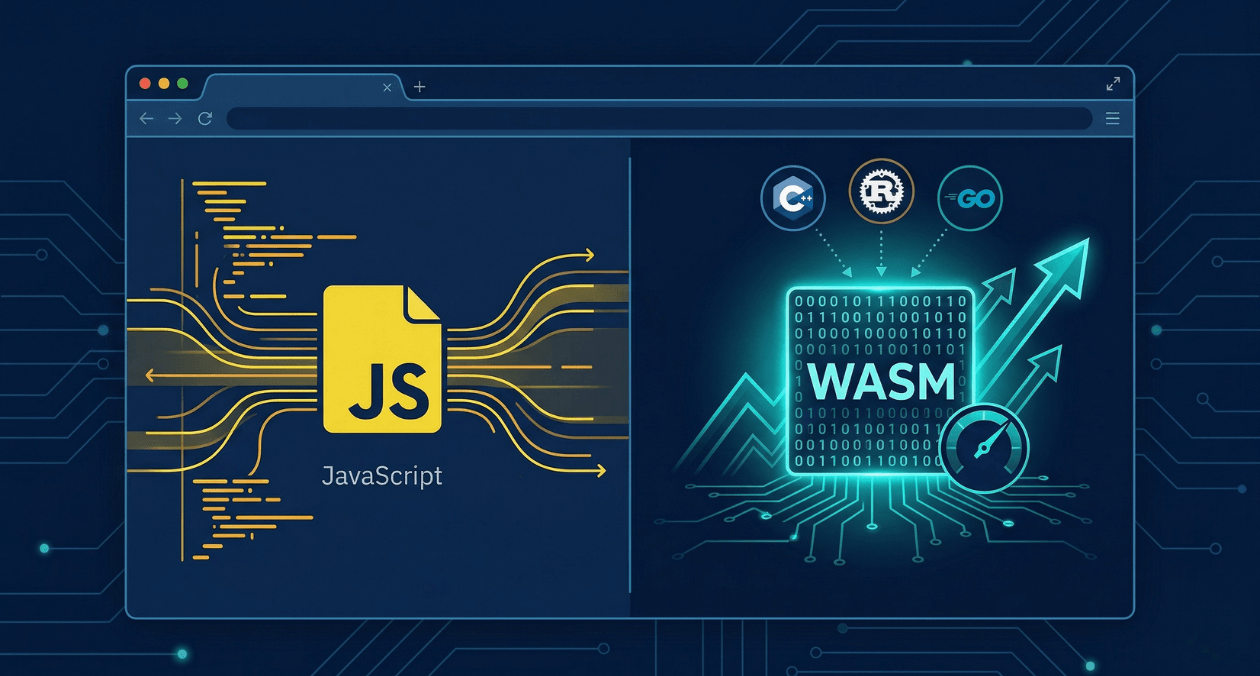
WebAssembly in 2026: Performance, Use Cases and When to Use It in Production
WebAssembly has been in the conversation for nearly a decade, but 2026 is the year more engineering teams are moving it from experimental to...