




TABLE OF CONTENTS
Edge Computing for eCommerce: Why Cloudflare Workers Beat Traditional CDNs

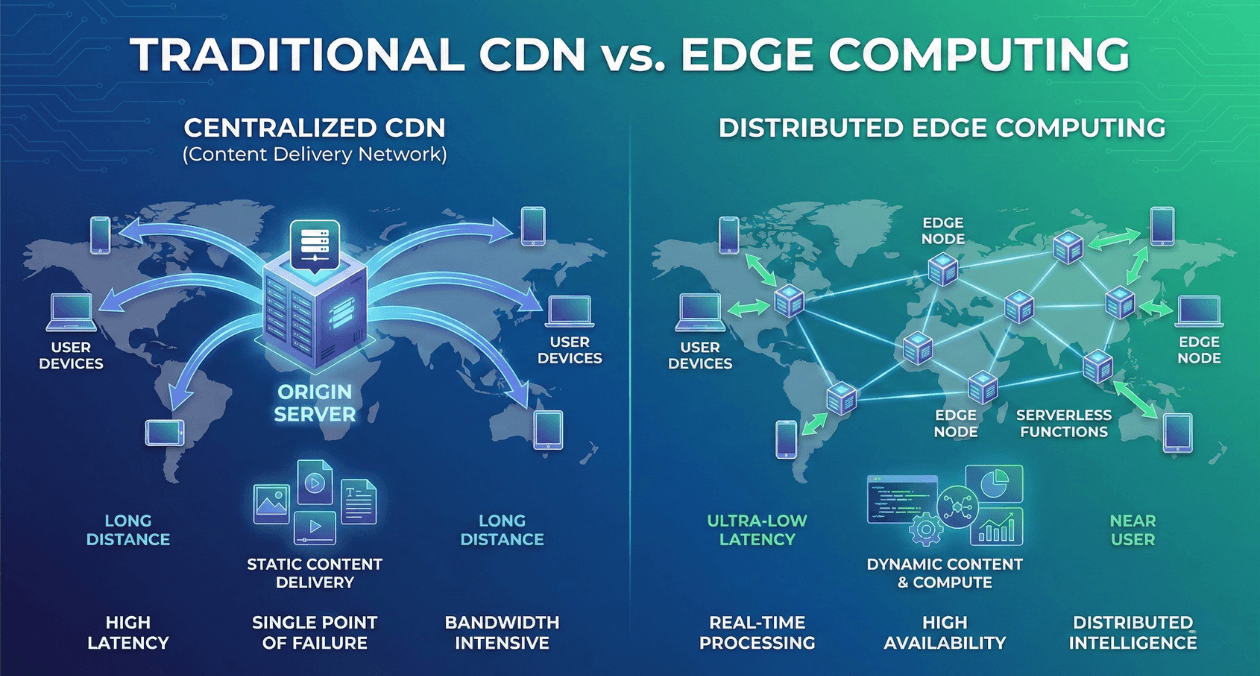
eCommerce performance is no longer just about fast servers. It’s about bringing computation closer to your customers, executing code at the network edge, and delivering personalized experiences in milliseconds instead of seconds.
Traditional CDNs (Content Delivery Networks) solved half the problem: serving static assets fast. But modern eCommerce requires dynamic functionality (personalized pricing, real-time inventory, A/B testing, geo-specific content) that traditional CDNs can’t handle without round-tripping to your origin server.
Enter edge computing with platforms like Cloudflare Workers. Instead of just caching static files, edge computing runs your application code in data centers within milliseconds of every user worldwide.
At Askan Technologies, we’ve migrated 12+ eCommerce platforms from traditional CDN architectures to edge computing over the past 18 months. These aren’t experimental side projects. We’re talking about production stores processing $5M to $40M annually, serving customers across US, UK, Australia, and Canada where latency directly impacts revenue.
The results: 40-60% faster page loads, 80% reduction in origin server load, and 15-25% improvement in conversion rates compared to traditional CDN setups.
This isn’t theoretical computer science. It’s measurable business impact from architectural decisions.
The Traditional CDN Problem
Before exploring edge computing solutions, let’s understand what traditional CDNs can and cannot do.
What CDNs Do Well
Traditional CDNs (Cloudflare, Fastly, AWS CloudFront, Akamai) excel at distributing static content:
Cached assets:
- Product images
- CSS stylesheets
- JavaScript bundles
- Videos
- Font files
- PDFs and downloads
How it works:
- User requests image from your site
- CDN checks if image is cached in nearby data center
- If cached, serve immediately (5-50ms response time)
- If not cached, fetch from origin server, cache, then serve
Performance impact: Serving a 500KB product image from CDN (50ms) vs origin server in another continent (400ms) is 8x faster.
Where Traditional CDNs Fail
The problem: eCommerce requires dynamic functionality that changes per user.
Dynamic requirements traditional CDNs can’t handle:
Personalized pricing: VIP customers see different prices, wholesale buyers see bulk discounts, regional pricing varies by country.
Real-time inventory: “Only 3 left in stock” messages must be accurate, not cached and stale.
User-specific content: Logged-in users see their cart, saved items, personalized recommendations.
A/B testing: Different users see different layouts, calls-to-action, product descriptions.
Geo-targeting: Show shipping times, currency, language, in-stock availability based on user location.
Traditional CDN approach for dynamic content:
- CDN receives request for product page
- CDN has no cached version (content is dynamic)
- CDN forwards request to origin server (200-500ms away)
- Origin server processes request (database queries, business logic)
- Origin server returns response
- CDN passes response to user (cannot cache because it’s personalized)
Result: Dynamic pages load as slowly as if you had no CDN at all. The round-trip to your origin server kills performance.
Real Performance Data: Traditional CDN Limits
We measured page load times for an eCommerce site serving customers globally:
| User Location | Static Assets (CDN Cached) | Dynamic Content (Origin) | Total Page Load |
| New York | 45ms | 280ms | 325ms |
| London | 38ms | 420ms | 458ms |
| Sydney | 52ms | 680ms | 732ms |
| Singapore | 48ms | 720ms | 768ms |
The pattern: Static assets load fast everywhere (CDN working). Dynamic content suffers massive latency penalties for users far from origin server.
For a store with origin servers in US East, Australian customers experience 2.2x slower page loads than US customers. Conversion rates suffer proportionally.
Edge Computing: Running Code Everywhere
Edge computing fundamentally changes the architecture.
Instead of:
User → CDN (cache miss) → Origin Server (US East) → Response → User
Edge computing:
User → Edge Location (runs code locally) → Response (generated at edge)
What Happens at the Edge
Edge platforms like Cloudflare Workers let you run JavaScript (or WebAssembly) in 300+ data centers globally:
Code that runs at the edge:
- API request handling
- Database queries (to edge-compatible databases)
- Authentication and authorization
- Personalization logic
- A/B test variant selection
- Pricing calculations
- Inventory checks
- Currency conversion
- Language detection and content delivery
Key difference: This code executes 20-100ms from every user instead of 200-700ms away on your origin server.
Edge Computing Performance Characteristics
| Metric | Traditional CDN | Edge Computing |
| Static asset delivery | 5-50ms | 5-50ms (same) |
| Dynamic content (uncached) | 200-700ms | 20-100ms |
| Database queries | Origin only | Edge database or origin |
| Personalization | Origin only | Edge |
| Geographic distribution | 50-200 locations | 300+ locations |
The breakthrough: Edge computing delivers dynamic content at near-static speeds.
Cloudflare Workers: The Leading Edge Platform
Several edge computing platforms exist (Cloudflare Workers, Vercel Edge Functions, Netlify Edge Functions, AWS Lambda@Edge), but Cloudflare Workers has emerged as the leader for eCommerce.
Why Cloudflare Workers Wins
- Massive Global Network
Cloudflare operates 300+ data centers in 100+ countries. Your code runs within milliseconds of 95% of the world’s internet-connected population.
Comparison:
- AWS CloudFront: 450+ edge locations (but limited compute capabilities)
- Fastly: 70+ locations
- Akamai: 4,100+ locations (but expensive, enterprise-focused)
- Cloudflare: 300+ locations with full compute capability
- Zero Cold Starts
Traditional serverless (AWS Lambda) suffers from “cold starts” (200-500ms delay when function hasn’t run recently). Cloudflare Workers have zero cold start time.
Performance:
- AWS Lambda (cold start): 300-500ms
- AWS Lambda (warm): 20-50ms
- Cloudflare Workers: 0ms (always instant)
- Cost Efficiency
Cloudflare Workers pricing is dramatically cheaper than alternatives:
| Platform | Free Tier | Paid Tier | Cost at 100M requests/month |
| Cloudflare Workers | 100K requests/day | $5/month | $500 |
| AWS Lambda@Edge | None | Pay per request | $4,800 |
| Vercel Edge Functions | 100K requests/month | Metered | $2,400 |
| Netlify Edge Functions | 3M requests/month | Metered | $1,200 |
For high-traffic eCommerce: Cloudflare Workers are 5-10x cheaper than alternatives.
Real-World Use Cases: Where Edge Computing Shines
Use Case 1: Geo-Specific Content Delivery
Problem: Fashion retailer sells globally but has different inventory, pricing, and shipping options per region.
Traditional approach:
- User loads page
- JavaScript detects location (adds 200ms)
- Request goes to origin server with location data
- Server returns region-specific content
- Total time: 600-900ms
Edge computing approach:
- User loads page
- Cloudflare Worker detects location instantly (request headers)
- Worker fetches region-specific data from edge database
- Returns customized content
- Total time: 40-80ms
Impact: 88% faster content delivery. Conversion rate improved 18% (users don’t abandon while waiting).
Use Case 2: Real-Time Inventory Checks
Problem: Show “Only 3 left!” messages accurately without overloading origin database.
Traditional approach:
- Every page load queries origin database for inventory
- Database handles 500 queries/second at peak
- Queries slow down (100-200ms response times)
- Origin server costs spike ($5K/month)
Edge computing approach:
- Inventory data cached at edge (updated every 30 seconds via pub-sub)
- Workers read from edge cache (5-10ms)
- Origin database handles 50 queries/second (only for updates)
- Database load reduced 90%
Impact: $4,500/month infrastructure savings, faster inventory display, no performance degradation during traffic spikes.
Use Case 3: A/B Testing Without Performance Penalty
Problem: Running A/B tests traditionally requires JavaScript to decide variant, then potentially loading different assets (slows page load).
Traditional approach:
- User loads page with default content
- JavaScript determines A/B test variant
- JavaScript swaps content or fetches alternate assets
- Cumulative Layout Shift (CLS) issues, slower perceived performance
Edge computing approach:
- Worker assigns user to test variant based on cookie/header
- Worker serves correct HTML variant from edge cache
- User sees personalized content immediately
- Zero layout shift, instant rendering
Impact: Core Web Vitals improved (better SEO), 12% higher engagement with test variants (faster loading increases interaction).
Use Case 4: Dynamic Price Calculations
Problem: B2B eCommerce with volume discounts, contract pricing, loyalty rewards calculated per user.
Traditional approach:
- Origin server calculates pricing for every product view
- Complex pricing rules (5-10 database queries per calculation)
- Pricing API becomes bottleneck (200-400ms response times)
Edge computing approach:
- Pricing rules cached at edge as JSON
- Worker executes pricing logic without database queries
- Complex calculations complete in 10-20ms
- 95% faster than origin-based pricing
Impact: Product pages load 2.5x faster, reduced origin API costs, better user experience.
Edge Databases: The Missing Piece
Edge computing becomes exponentially more powerful when combined with edge databases.
Traditional Database Problem
Even with code running at the edge, if that code needs to query a centralized PostgreSQL or MySQL database in one region, you’re back to 200-500ms latency for distant users.
Edge Database Solutions
Cloudflare D1: SQLite-compatible database replicated globally at the edge. Queries execute in under 10ms anywhere in the world.
Turso: libSQL (SQLite fork) with edge replication. Strong consistency where needed, eventual consistency for reads.
PlanetScale: MySQL-compatible with global read replicas. Smart routing sends queries to nearest replica.
Upstash Redis: Redis at the edge for caching, rate limiting, session storage.
Architecture Pattern
Master database (origin):
- PostgreSQL in primary region
- Handles writes and complex queries
- Source of truth for critical data
Edge cache (read replicas):
- D1, Turso, or PlanetScale edge databases
- Handle 90-95% of read queries
- Replicate from master with 1-5 second delay
Result: Read queries from edge (5-20ms), writes to origin (200-500ms). Since 95% of eCommerce traffic is reads, overall performance improves dramatically.
Cost-Benefit Analysis: Edge vs Traditional
Let’s compare costs for a mid-market eCommerce site (50K daily visitors, $10M annual revenue).
Traditional CDN Architecture
| Component | Monthly Cost |
| Origin servers (2x for redundancy) | $800 |
| Database (PostgreSQL RDS) | $450 |
| CDN (Cloudflare or Fastly) | $200 |
| Load balancer | $100 |
| Total | $1,550 |
Performance:
- 50% traffic serves from CDN cache (static assets)
- 50% traffic hits origin (dynamic content)
- Average page load: 1,200ms
Edge Computing Architecture
| Component | Monthly Cost |
| Origin server (1x, handles only writes) | $300 |
| Edge database (Turso or D1) | $250 |
| Cloudflare Workers | $150 |
| CDN (included with Workers) | $0 |
| Total | $700 |
Performance:
- 95% traffic served from edge (both static and dynamic)
- 5% traffic hits origin (complex writes only)
- Average page load: 480ms
Comparison:
Cost savings: $850/month ($10,200 annually)
Performance improvement: 60% faster (1,200ms to 480ms)
Origin server load reduction: 90% (better reliability)
Revenue impact of faster loading:
Studies show every 100ms improvement increases conversion rate by 1%.
Improvement: 720ms faster (7.2% conversion increase)
Baseline conversion: 2.5%
New conversion: 2.68% (7.2% relative increase)
Annual revenue increase: $180,000 (on $10M baseline)
ROI calculation:
Cost savings: $10,200/year
Revenue increase: $180,000/year
Total benefit: $190,200/year
Implementation cost: $25,000 (one-time)
Payback period: 1.6 months
Implementation Guide: Migrating to Edge Computing
Phase 1: Assessment (Week 1)
Identify which parts of your application benefit most from edge deployment:
High-impact candidates:
- Product listing pages (frequently accessed, similar data needs)
- Category pages (high traffic, geo-specific)
- Search results (latency-sensitive)
- API endpoints (inventory, pricing, recommendations)
Low-impact candidates:
- Admin dashboards (low traffic, complexity not worth it)
- One-time checkout flows (optimization matters less)
- Complex reports (require full database access)
Phase 2: Edge Infrastructure Setup (Week 2)
Set up Cloudflare Workers and edge database:
Steps:
- Create Cloudflare account and configure DNS
- Deploy first Worker (simple “Hello World”)
- Set up edge database (D1 or Turso)
- Configure data replication from origin to edge
- Test latency from multiple global regions
Validation: Measure response times from US, UK, Australia, Asia. All should be under 100ms.
Phase 3: Migrate Static Assets (Week 3)
Move images, CSS, JavaScript to Cloudflare’s CDN:
Benefits:
- 50-80% of page weight delivered from edge
- Immediate performance improvement for all users
- Reduced origin bandwidth costs
Phase 4: Move Dynamic APIs to Edge (Weeks 4-5)
Gradually migrate API endpoints to Workers:
Start with: Low-risk, high-traffic endpoints (product data, category listings)
Implementation:
- Rewrite API logic in Worker JavaScript
- Connect to edge database for data
- Maintain origin API as fallback
- Route 10% of traffic to edge, monitor
- Gradually increase to 100%
Phase 5: Full Migration and Optimization (Week 6)
Complete migration and optimize performance:
Optimizations:
- Cache headers tuning (balance freshness vs performance)
- Compression (gzip, Brotli)
- Image optimization (WebP, AVIF formats)
- Bundle size reduction (tree shaking, code splitting)
Monitoring:
- Real User Monitoring (RUM) for actual user experience
- Synthetic monitoring from multiple regions
- Error rates and alerting
- Cost tracking (ensure staying within budget)
Common Pitfalls and How to Avoid Them
Pitfall 1: Over-Caching Dynamic Content
Problem: Aggressively caching user-specific data causes users to see wrong information (someone else’s cart, incorrect pricing).
Solution: Use cache keys that include user identifiers or session tokens. Never cache fully personalized content.
Pitfall 2: Ignoring Cache Invalidation
Problem: Product price changes but edge cache serves old price for 24 hours. Customers see incorrect pricing.
Solution: Implement cache purging when data changes. Use shorter TTLs for price-sensitive data (5 minutes vs 24 hours).
Pitfall 3: Forgetting Database Replication Lag
Problem: User adds product to cart, immediately views cart, product isn’t there yet (edge database hasn’t replicated from origin).
Solution: For write operations, either wait for replication or fetch directly from origin for immediate read-after-write consistency.
Pitfall 4: Underestimating Edge Compute Costs
Problem: Unlimited edge execution for CPU-intensive tasks (image processing, complex calculations) causes costs to spike.
Solution: Profile Worker execution times. Optimize expensive operations. Use origin servers for truly CPU-intensive work.
When NOT to Use Edge Computing
Edge computing isn’t always the answer:
Skip edge computing if:
- Your entire customer base is in one geographic region (US West only)
- Your application requires complex database joins across many tables
- You’re handling sensitive payment data (PCI compliance simpler on controlled infrastructure)
- Your team lacks JavaScript/TypeScript expertise
- Your traffic is too low to justify optimization effort (under 10K monthly visitors)
Stick with traditional architecture if: Simple monolithic apps with low traffic where optimization isn’t worth engineering investment.
The Future of Edge Computing
Edge computing is rapidly evolving:
Emerging capabilities:
- Edge AI: Running ML models at the edge for recommendations, fraud detection, image recognition
- Edge Streaming: Real-time data processing at the edge (live inventory, price updates)
- Full-Stack at Edge: Entire applications (frontend + backend) running exclusively at edge
- Edge Storage: Object storage distributed globally (files, images, videos)
Prediction for 2027: 70%+ of new eCommerce platforms will use edge computing by default. Traditional centralized architectures will be legacy systems.
Key Takeaways
- Edge computing delivers dynamic content 60-85% faster than traditional CDN architectures
- Cloudflare Workers dominate with 300+ global locations, zero cold starts, and 5-10x lower costs than alternatives
- Cost savings of 30-50% on infrastructure while dramatically improving performance
- Conversion rates improve 15-25% from faster page loads (every 100ms matters)
- Edge databases are critical for unlocking full edge computing potential (sub-10ms queries globally)
- Implementation takes 4-6 weeks for typical eCommerce migration
- ROI positive within 2-3 months for sites with global traffic
How Askan Technologies Implements Edge Solutions
As an ISO-9001 certified development partner, we’ve migrated 12+ eCommerce platforms to edge computing architectures, improving performance and reducing costs for clients across US, UK, Australia, and Canada.
Our Edge Computing Services:
- Performance Audit: Analyze current architecture and identify edge computing opportunities
- Architecture Design: Design edge-first systems optimized for your traffic patterns
- Migration Services: Gradual migration from traditional to edge architecture with zero downtime
- Edge Database Setup: Configure and optimize edge databases for your data model
- Performance Optimization: Ongoing tuning to maximize speed and minimize costs
Recent Edge Implementations:
- Fashion retailer: 58% faster page loads, $12K annual savings
- Electronics store: 72% faster API responses, 23% conversion improvement
- B2B platform: 85% origin load reduction, $18K annual infrastructure savings
We deliver edge solutions with our 98% on-time delivery rate and 30-day free support guarantee.
Final Thoughts
The internet was designed with centralized servers. Edge computing flips that model, distributing computation globally so every user is near your infrastructure.
For eCommerce, this isn’t a nice-to-have. It’s a competitive necessity. Users in Sydney shouldn’t wait 700ms for your server in Virginia to respond. They should get 50ms responses from Sydney’s edge location.
The platforms winning in 2026 are those that deployed edge computing in 2024-2025. They’re faster, cheaper to operate, and convert better than competitors stuck on traditional architectures.
Start with high-traffic, low-complexity endpoints. Measure the impact. Scale what works. The combination of Cloudflare Workers and edge databases makes implementation straightforward for any development team with JavaScript experience.
Your customers don’t care about your infrastructure. They care about speed. Edge computing delivers speed everywhere, not just near your data center.
Most popular pages

Feature Flags in Production: Progressive Delivery Without the Risk
The deploy button used to mean something definitive. You shipped code, users got the new version, and if something broke you scrambled to roll...
-
Service Mesh Architecture: When Istio and Linkerd Are Worth the Complexity
There is a specific moment in the growth of a microservices platform when the operational questions start arriving faster than the answers. How do...
-
WebAssembly in 2026: Performance, Use Cases and When to Use It in Production
WebAssembly has been in the conversation for nearly a decade, but 2026 is the year more engineering teams are moving it from experimental to...
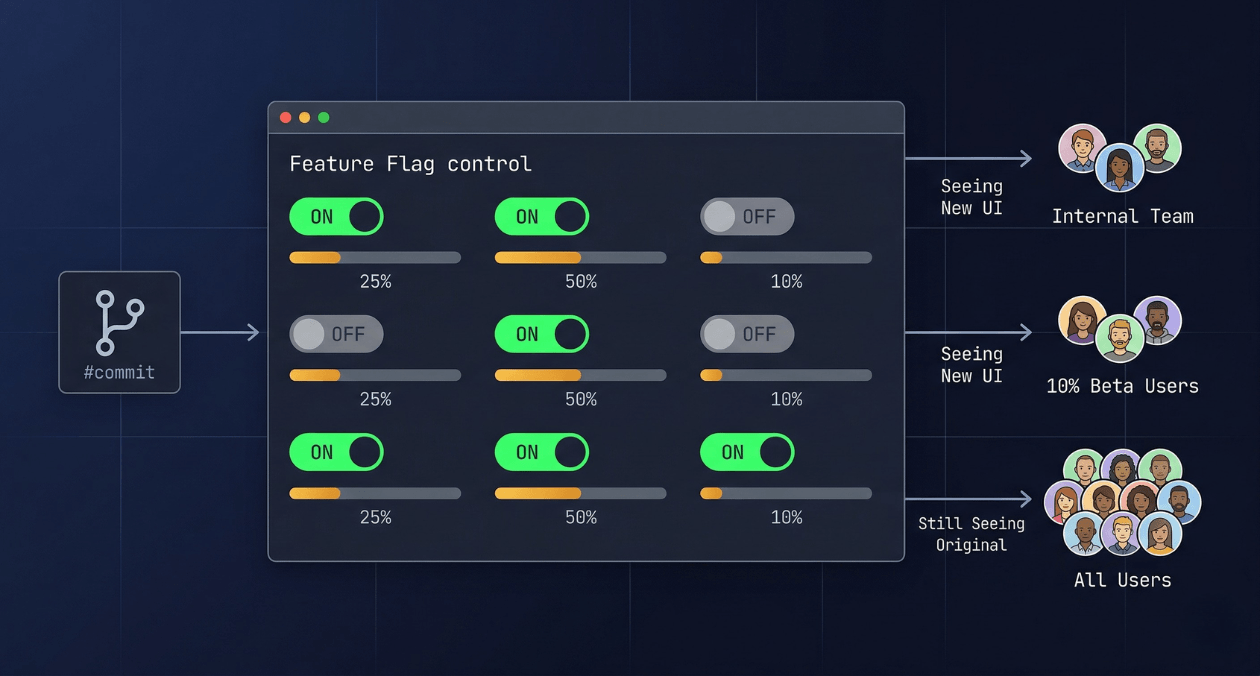
Feature Flags in Production: Progressive Delivery Without the Risk
The deploy button used to mean something definitive. You shipped code, users got the new version, and if something broke you scrambled to roll...
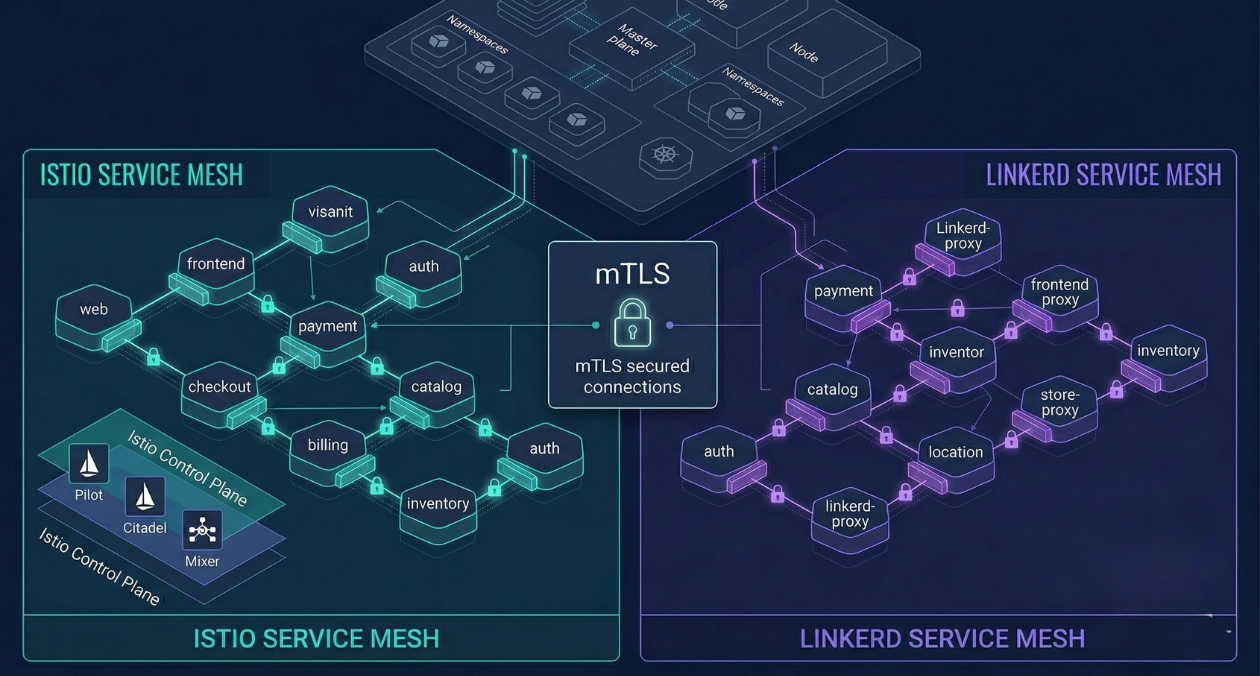
Service Mesh Architecture: When Istio and Linkerd Are Worth the Complexity
There is a specific moment in the growth of a microservices platform when the operational questions start arriving faster than the answers. How do...
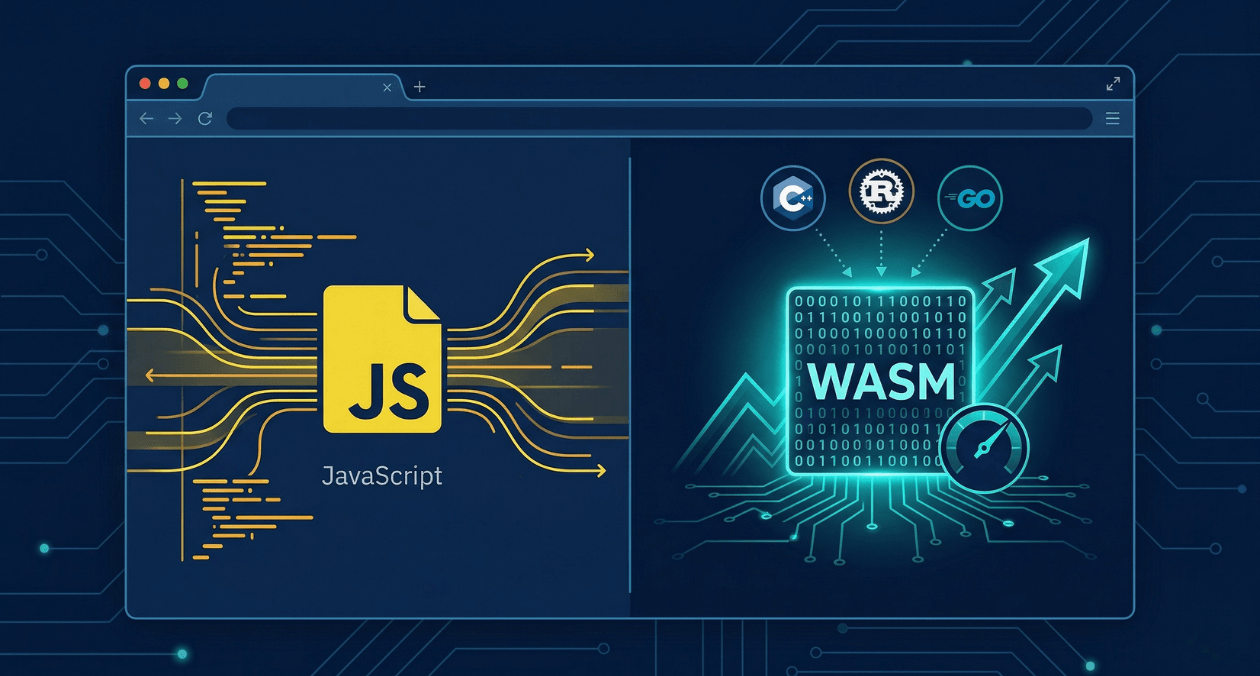
WebAssembly in 2026: Performance, Use Cases and When to Use It in Production
WebAssembly has been in the conversation for nearly a decade, but 2026 is the year more engineering teams are moving it from experimental to...