





Understanding RTO and RPO: The Foundation
Before building DR systems, you must define your recovery objectives.Recovery Time Objective (RTO)
What it is: Maximum acceptable downtime after disasterBusiness question: "How long can our business survive without this system?"Examples by system type:| System | RTO | Business Impact |
| E-commerce checkout | 5 minutes | $50K+ revenue loss per hour |
| Email system | 4 hours | Communication disruption acceptable for hours |
| CRM database | 1 hour | Sales team blocked, deals delayed |
| Analytics dashboard | 24 hours | Reports can wait, no immediate impact |
| Payment processing | 0 minutes (HA required) | Every second of downtime = lost revenue + compliance risk |
Recovery Point Objective (RPO)
What it is: Maximum acceptable data loss measured in timeBusiness question: "How much data can we afford to lose?"Examples by system type:| System | RPO | Data Loss Tolerance |
| Financial transactions | 0 seconds | Zero tolerance (every transaction must be preserved) |
| Customer support tickets | 15 minutes | Last 15 min of tickets can be recreated from email |
| Marketing analytics | 24 hours | Yesterday's metrics acceptable, not real-time critical |
| User uploads | 0 seconds | Customer data loss unacceptable |
| Application logs | 1 hour | Recent logs can be lost without business impact |
The Cost Curve
DR costs increase exponentially as RTO and RPO approach zero.Typical cost by requirement:| RTO | RPO | DR Strategy | Annual Cost (for $500K infrastructure) |
| 24 hours | 24 hours | Daily backups to cloud storage | $5K-$10K |
| 4 hours | 1 hour | Hourly backups + warm standby | $25K-$50K |
| 1 hour | 15 minutes | Continuous replication + hot standby | $75K-$150K |
| 5 minutes | 0 seconds | Active-active multi-region | $200K-$400K |
The DR Strategy Spectrum
Different approaches provide different RTO/RPO capabilities at different costs.Strategy 1: Backup and Restore (RTO: 12-24 hours, RPO: 6-24 hours)
What it is:- Regular backups to cold storage (S3, Azure Blob)
- Restore from backup when disaster occurs
- Rebuild infrastructure from scratch
- Disaster occurs
- Assess damage and decide to failover
- Provision new infrastructure
- Restore data from latest backup
- Reconfigure applications
- Test and validate
- Resume operations
- Cheapest option
- Simple to implement
- Works for non-critical systems
- Slow recovery (hours to day)
- High data loss potential (24 hours of data)
- Manual process prone to errors
- Internal tools
- Development/staging environments
- Analytics and reporting systems
- Non-revenue systems
Strategy 2: Pilot Light (RTO: 2-4 hours, RPO: 30-60 minutes)
What it is:- Core infrastructure always running in DR site (database replicas)
- Application tier stopped (can be started quickly)
- Continuous or frequent data replication
- Disaster occurs
- Start application servers in DR site (10-15 minutes)
- Update DNS to point to DR site (5-10 minutes)
- Scale up to handle production traffic (20-30 minutes)
- Validate and monitor
- Faster than backup/restore
- Data replicated continuously (low RPO)
- Reasonable cost
- Still requires manual intervention
- Application tier cold start
- Testing requires bringing full environment up
- Business-critical but not mission-critical systems
- E-commerce platforms (non-peak hours)
- SaaS applications with moderate uptime requirements
Strategy 3: Warm Standby (RTO: 30-60 minutes, RPO: 5-15 minutes)
What it is:- Full environment running in DR site at reduced capacity
- Continuous data replication
- Can scale to full capacity quickly
- Disaster occurs
- Scale DR site to full capacity (5-10 minutes)
- Fail over traffic to DR site (5-10 minutes)
- Validate functionality (10-15 minutes)
- Monitor and adjust
- Quick recovery (under 1 hour)
- Minimal data loss
- Can test DR regularly without disruption
- Expensive (running duplicate infrastructure)
- Requires automated failover for speed
- Data synchronization complexity
- Revenue-critical applications
- Customer-facing systems with SLA requirements
- Financial services platforms
- Healthcare applications
Strategy 4: Hot Standby / Active-Passive (RTO: 5-15 minutes, RPO: 0-5 minutes)
What it is:- Full production environment running in DR site
- Real-time synchronous replication
- Immediate failover capability
- Disaster detected (automated monitoring)
- Automated failover triggered (1-2 minutes)
- Traffic redirected to DR site (2-3 minutes)
- Validation and monitoring
- Near-instant recovery
- Zero to minimal data loss
- Automated process (no manual steps)
- Very expensive (double infrastructure)
- Complex to implement and maintain
- Synchronous replication impacts performance
- Mission-critical systems
- Payment processing
- Trading platforms
- Systems with zero-tolerance downtime SLAs
Strategy 5: Active-Active Multi-Region (RTO: 0 seconds, RPO: 0 seconds)
What it is:- Production traffic served from multiple regions simultaneously
- Both regions active and processing requests
- No failover needed (traffic automatically routes around failures)
- Disaster occurs in one region
- Load balancer stops routing to failed region (automatic, seconds)
- Remaining regions absorb traffic
- No user impact beyond brief latency spike
- Zero downtime
- Zero data loss
- No failover process needed
- Regional redundancy built-in
- Most expensive option
- Complex data consistency challenges
- Requires application design for multi-region
- Higher operational complexity
- Global applications requiring 99.99%+ uptime
- Financial trading systems
- Critical infrastructure platforms
- Systems where any downtime = regulatory violation
Cost-Benefit Analysis Framework
How much should you spend on DR? Calculate the business case.Calculate Your Downtime Cost
Formula: Cost per hour = (Revenue per hour) + (Recovery costs) + (Reputation damage)Example: E-commerce platform- Revenue: $50M annually = $5,700/hour
- Recovery costs: Emergency engineering @ $500/hour × 10 engineers = $5,000/hour
- Reputation damage: Customer churn, negative reviews (estimated 20% of revenue loss) = $1,140/hour
- Total: $11,840/hour
Calculate DR Investment
Annual DR cost for different strategies:| Strategy | Annual Cost | RTO | Expected Annual Outage |
| Backup/Restore | $10K | 24 hours | 8 hours (pilot light warmup + restore) |
| Pilot Light | $50K | 4 hours | 4 hours total |
| Warm Standby | $120K | 1 hour | 1 hour total |
| Hot Standby | $200K | 15 minutes | 15 minutes total |
ROI Calculation
Scenario: Expecting one major disaster per 3 yearsOption 1: Backup/Restore ($10K/year)- Outage duration: 24 hours
- Cost of outage: $284K
- Amortized annual outage cost: $94.7K
- Total annual cost: $104.7K
- Outage duration: 1 hour
- Cost of outage: $11.8K
- Amortized annual outage cost: $3.9K
- Total annual cost: $123.9K
Break-Even Analysis
When does investment in better DR pay off?Formula: Break-even outage frequency = (Cost difference) / (Outage cost savings)Example: Warm standby vs Backup/Restore- Cost difference: $110K/year
- Outage cost savings per incident: $272K (24hr vs 1hr)
- Break-even: 0.4 outages per year
Real Implementation: Financial Services Platform
Company Profile
Industry: Wealth management platform Scale: $2.8B assets under management, 18,000 active users Compliance: SEC, FINRA regulations require 4-hour RTO Revenue impact: $250K/hour during market hours (estimated)Previous DR setup:- Daily database backups to S3
- No automated recovery process
- Infrastructure as code for rebuild
- Estimated RTO: 16-24 hours
- Estimated RPO: 24 hours
- Annual DR cost: $12K
- RTO doesn't meet compliance requirement (4 hours mandated)
- Never tested full recovery (just backup verification)
- Manual process prone to errors
- Revenue risk during recovery
New DR Architecture
Target requirements:- RTO: 2 hours (50% better than compliance minimum)
- RPO: 15 minutes (acceptable data loss for this business)
- Annual budget: $150K maximum
- Must pass compliance audit
- Application tier: Auto-scaling group (10-30 instances)
- Database: RDS PostgreSQL Multi-AZ (primary)
- Object storage: S3 with versioning
- Load balancer: Application Load Balancer
- Application tier: Auto-scaling group (min 0, max 30) - scaled to zero normally
- Database: RDS Read Replica (continuous replication, 5-minute lag)
- Object storage: S3 Cross-Region Replication (real-time)
- Load balancer: Application Load Balancer (pre-configured)
- Detection (automated): CloudWatch alarms trigger if primary region unreachable for 3 minutes
- Notification: PagerDuty alerts on-call engineer + executive team
- Decision: On-call engineer assesses and approves failover (5 minutes)
- Promotion: Database read replica promoted to primary (automated, 2 minutes)
- Application start: Auto-scaling group in DR region scales to 10 instances (5 minutes)
- DNS update: Route 53 switches traffic to DR region (1 minute)
- Validation: Automated health checks verify system functional (3 minutes)
- Scale-up: Auto-scaling responds to traffic, scales to 30 instances as needed (10 minutes)
Implementation Process (12 Weeks)
Weeks 1-3: Design and approval- Document RTO/RPO requirements
- Design DR architecture
- Calculate costs and get budget approval
- Create runbooks for failover procedures
- Provision DR region infrastructure (IaC with Terraform)
- Configure database replication
- Set up cross-region S3 replication
- Implement monitoring and alerting
- Write failover automation scripts
- Implement health checks and monitoring
- Create rollback procedures
- Document all processes
- Tabletop exercise (talk through scenarios)
- Partial failover test (DR environment only, no production impact)
- Full failover test (during maintenance window)
- Chaos engineering (random component failures)
Results After 18 Months
Cost:| Component | Annual Cost |
| DR region infrastructure (running) | $48,000 |
| Data replication (RDS, S3) | $18,000 |
| Cross-region data transfer | $12,000 |
| Monitoring and automation | $6,000 |
| Quarterly DR testing | $8,000 |
| Total | $92,000 |
- 4 full DR drills conducted
- Average RTO achieved: 32 minutes (target: 2 hours, 73% better)
- Average RPO achieved: 8 minutes (target: 15 minutes, 47% better)
- Success rate: 100% (all tests successful)
- AWS US-East-1 experienced regional outage (actual disaster)
- DR failover executed: 28 minutes to full service restoration
- Data loss: 6 minutes of transactions
- Customer impact: Minimal (brief service interruption during market hours)
- Revenue loss: $117K (vs $6M+ if 24-hour recovery)
- Passed SEC audit with distinction
- Auditors impressed by documented testing and actual incident performance
- RTO and RPO both exceed regulatory requirements
- Avoided revenue loss: $5.9M (during actual incident)
- Avoided regulatory fines: Potential $1M+ for non-compliance
- Competitive advantage: Marketing now touts 99.99% uptime
- ROI: DR system paid for itself in single incident
DR Testing: The Critical Component
Most DR plans fail not because they're poorly designed, but because they're never tested.Testing Frequency Guidelines
| System Criticality | Full DR Test Frequency | Partial Test Frequency |
| Mission-critical | Quarterly | Monthly |
| Business-critical | Semi-annually | Quarterly |
| Important | Annually | Semi-annually |
| Non-critical | As needed | Annually |
Types of DR Tests
- Tabletop Exercise (Cost: $2K-$5K)
- Team talks through disaster scenarios
- Identifies gaps in runbooks
- No actual infrastructure changes
- Time required: 2-4 hours
- Frequency: Quarterly
- Partial Failover Test (Cost: $5K-$10K)
- Test DR environment in isolation
- Don't impact production
- Validate infrastructure, not traffic handling
- Time required: 4-8 hours
- Frequency: Quarterly
- Full Failover Test (Cost: $15K-$30K)
- Actually fail over production traffic
- Requires maintenance window
- Tests complete process end-to-end
- Time required: 6-12 hours (includes rollback)
- Frequency: Annually minimum
- Chaos Engineering (Cost: $20K-$50K for tools + time)
- Random failures injected continuously
- Validates automated recovery
- Builds confidence in systems
- Time required: Ongoing (automated)
- Frequency: Continuous
Common Testing Findings
From 35+ DR tests we've conducted:Finding 1: Documentation outdated (65% of tests)- Runbooks reference deleted resources
- IP addresses changed
- Access credentials expired
- Third-party APIs fail in DR region
- Internal services not replicated
- Authentication systems region-locked
- Replication lag higher than expected
- Some data not replicated at all
- Corrupted data not detected
- DR region undersized for production load
- Network latency higher than expected
- Database too small
- Manual steps take longer than estimated
- Automation fails or incomplete
- Coordination delays
Cloud Provider DR Capabilities
AWS
Native DR features:- Multi-AZ deployments (automatic failover within region)
- Cross-region replication (RDS, S3, DynamoDB)
- Route 53 health checks and failover
- Backup services (automated snapshots)
- Use multiple availability zones for HA
- Use cross-region for DR
- Automate with CloudFormation/Terraform
Azure
Native DR features:- Availability Zones (within-region redundancy)
- Azure Site Recovery (automated DR orchestration)
- Geo-redundant storage (automatic replication)
- Traffic Manager (DNS-based failover)
- Use Availability Zones for HA
- Use paired regions for DR
- Azure Site Recovery for VMs
Google Cloud
Native DR features:- Regional persistent disks (within-region replication)
- Cloud SQL cross-region replicas
- Multi-regional Cloud Storage
- Cloud Load Balancing (global)
- Use regional resources for HA
- Use multi-region for DR
- Cloud Spanner for global consistency
Multi-Cloud DR Strategy
Some organizations use different cloud providers for DR to avoid correlated failures.Benefits
- Provider diversity: AWS outage doesn't affect Azure DR site
- Negotiating leverage: Multi-cloud enables better pricing
- Regulatory compliance: Some industries require provider diversity
Challenges
- Complexity: Managing infrastructure across two providers
- Data transfer costs: Cross-cloud replication expensive ($0.02-$0.09/GB)
- Tooling: Separate monitoring, automation for each provider
- Expertise: Team needs skills in multiple clouds
When Multi-Cloud DR Makes Sense
- Large enterprises ($50M+ cloud spend) where added complexity justified
- Regulated industries requiring provider diversity
- Organizations already multi-cloud for other reasons
When Single-Cloud Better
- Startups and SMBs where simplicity matters
- Organizations under $10M cloud spend
- Teams without multi-cloud expertise
Key Takeaways
- 70% of untested DR plans fail during actual disasters regular testing is non-negotiable
- RTO and RPO are business decisions, not technical ones define based on revenue impact and compliance
- DR costs increase exponentially as requirements tighten 5-minute RTO costs 10-15x more than 4-hour RTO
- Pilot light strategy balances cost and capability 2-4 hour RTO at 15-30% of infrastructure cost
- Match DR investment to actual business needs don't pay for 5-minute RTO when 4 hours is acceptable
- Testing frequency matters more than plan quality quarterly tests prevent 80% of failover failures
- Automation is critical for low RTO manual processes take 3-5x longer than documented
- Real incident validates DR investment one successful failover typically exceeds total DR costs
How Askan Technologies Builds DR Systems That Work
We've designed and tested disaster recovery systems for 35+ enterprises, achieving 95%+ success rates during actual disasters while optimizing costs 40-60% vs over-engineered solutions.Our Disaster Recovery Services:- RTO/RPO Analysis: Define recovery objectives based on business impact and compliance requirements
- DR Strategy Design: Architect appropriate solution matching technical and budget constraints
- Implementation: Deploy DR infrastructure with automation and monitoring
- Testing Programs: Establish regular testing cadence with documented procedures
- Compliance Support: Ensure DR meets regulatory requirements (SOC 2, HIPAA, PCI-DSS, FINRA)
- Incident Response: 24/7 support during actual disasters for failover execution
- Financial platform: Pilot light strategy, 32-minute RTO (target 2 hours), saved $5.9M during real incident
- Healthcare SaaS: Warm standby, 45-minute RTO, passed HIPAA audit, 100% test success rate
- E-commerce platform: Active-passive hot standby, 8-minute RTO, zero customer impact during outages


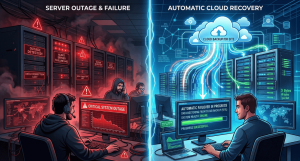

Building Disaster Recovery Systems That Actually Work: RTO and RPO Strategies
Disaster recovery is insurance you hope never to use. But when disasters strike (and they...
Share this link via
Or copy link