



TABLE OF CONTENTS
How to Add AI Features to Your Existing Web App Without Breaking the Bank

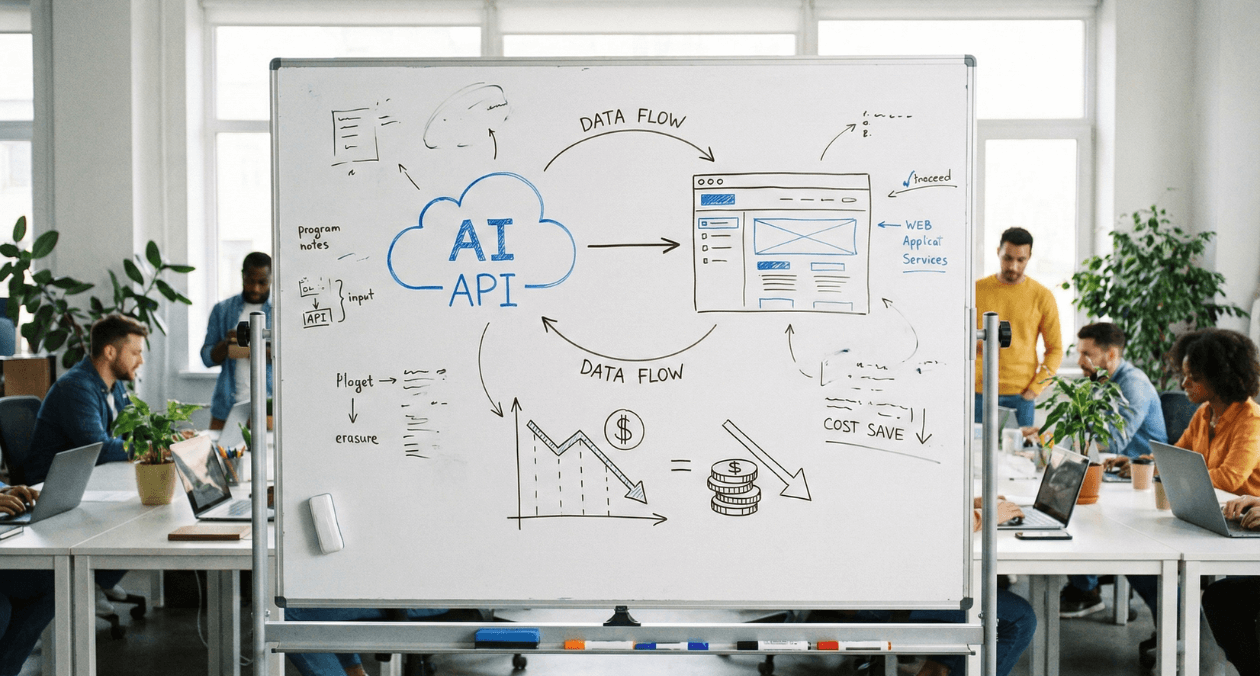
AI features have become table stakes for competitive web applications in 2026. Customers expect intelligent search, personalized recommendations, automated content generation, and smart assistance. But for product managers and CTOs at established companies, the question isn’t whether to add AI. It’s how to add AI features to existing applications without massive budgets, engineering rewrites, or vendor lock-in.
The good news: you don’t need a dedicated AI team, PhD researchers, or million-dollar infrastructure to add meaningful AI capabilities. Modern AI APIs from OpenAI, Anthropic, Google, and others provide powerful features for pennies per request.
The challenge: choosing which AI features deliver actual business value, implementing them without disrupting existing architecture, and controlling costs as usage scales.
At Askan Technologies, we’ve integrated AI features into 28+ existing web applications over the past 18 months. These aren’t greenfield projects. We’re adding AI to production systems serving 10K to 500K users across SaaS platforms, eCommerce sites, productivity tools, and internal business applications spanning US, UK, Australia, and Canada markets.
The cost data is unambiguous: well-implemented AI features cost $200 to $2,000 monthly at 50K user scale while delivering measurable improvements in user engagement (20-40% increases), conversion rates (15-25% lifts), and support cost reduction (30-50% decreases).
The AI Integration Landscape
Before exploring implementation strategies, let’s establish what AI capabilities are actually available and cost-effective for typical web applications.
Practical AI Features for Web Apps
Content Generation:
- Blog post drafting and editing
- Product description writing
- Email template generation
- Social media content creation
- Marketing copy optimization
Conversational Interfaces:
- Customer support chatbots
- Product recommendation assistants
- Onboarding guides
- Interactive documentation
- Sales qualification bots
Search and Discovery:
- Semantic search (understanding intent, not just keywords)
- Natural language queries (ask questions instead of filtering)
- Content recommendations
- Similar item discovery
- Autocomplete with context
Data Processing:
- Document summarization
- Sentiment analysis
- Data extraction from unstructured text
- Classification and categorization
- Translation and localization
Personalization:
- Content recommendations based on behavior
- Adaptive UI (interface adjusts to user needs)
- Personalized email content
- Dynamic pricing suggestions
- Custom dashboards
Build vs Buy: The 2026 Reality
Building custom AI models:
- Cost: $50K to $500K for training infrastructure
- Timeline: 6-12 months to production quality
- Expertise required: PhD-level ML engineers
- Ongoing costs: $10K to $50K monthly for hosting and refinement
Using AI APIs:
- Cost: $0.0001 to $0.03 per request (pay per use)
- Timeline: Days to weeks for integration
- Expertise required: Standard web developers
- Ongoing costs: Usage-based, starts under $100/month
The verdict for 95% of web applications: Use AI APIs. Custom models only make sense for companies with unique data advantages (Google, Meta, Netflix scale) or highly specialized domains where general AI doesn’t work.
Cost-Effective AI Feature Selection
Not all AI features deliver equal business value. Choose based on impact and cost efficiency.
High ROI AI Features (Implement First)
- Intelligent Search
Business impact:
- 30-50% improvement in search success rate
- 15-25% increase in conversion (users find what they want faster)
- Reduced support tickets (users self-serve better)
Implementation cost:
- OpenAI Embeddings API: $0.0001 per 1K tokens
- At 100K searches/month: $20-$40/month
Use case example: eCommerce site lets users search “comfortable running shoes for flat feet under $100” instead of requiring filters and category navigation.
- Customer Support Chatbot
Business impact:
- 40-60% reduction in Tier 1 support tickets
- 24/7 availability (no staffing costs for night/weekend)
- Instant response times (vs 2-8 hour human response)
Implementation cost:
- GPT-4 API: $0.01 per 1K input tokens, $0.03 per 1K output tokens
- At 10K conversations/month: $200-$400/month
ROI calculation:
- Support ticket cost: $15-$25 per ticket
- Chatbot handles 5,000 tickets monthly
- Savings: $75,000 to $125,000 annually
- Chatbot cost: $4,800 annually
- ROI: 1,460% to 2,504%
- Content Summarization
Business impact:
- Users consume 3-5x more content (easier to digest)
- Lower bounce rates (quick understanding of value)
- Better mobile experience (summaries work well on small screens)
Implementation cost:
- Claude API: $0.008 per 1K input tokens, $0.024 per 1K output tokens
- At 50K summaries/month: $100-$200/month
Use case example: Legal tech platform summarizes 50-page contracts into key points, saving lawyers 80% of document review time.
Medium ROI AI Features (Implement Second)
- Personalized Recommendations
Business impact:
- 10-20% increase in engagement (users discover relevant content)
- 5-15% increase in revenue (cross-sell and upsell)
- Higher retention (personalized experience increases stickiness)
Implementation cost:
- Recommendation API or custom embeddings: $100-$500/month
- At 100K users with daily recommendations
- Automated Content Generation
Business impact:
- 60-80% reduction in content creation time
- Consistent quality and tone
- Faster time to market for new content
Implementation cost:
- GPT-4 for drafting: $0.03 per 1K output tokens
- 100 articles/month (2K words each): $120-$180/month
Use case example: SaaS company generates product update emails automatically, saving marketing team 15 hours/week.
Lower ROI AI Features (Consider Carefully)
- Image Generation
Business impact: Variable depending on use case Cost: DALL-E 3: $0.04 to $0.12 per image When worth it: Marketing teams creating social media graphics, product mockups, blog illustrations
- Voice Interfaces
Business impact: Niche benefit for specific use cases Cost: Whisper (speech-to-text): $0.006 per minute When worth it: Accessibility features, hands-free applications, transcription services
Implementation Strategy: The Phased Approach
Phase 1: Pick One High-Impact Feature (Weeks 1-2)
Start with a single AI feature that delivers clear business value.
Selection criteria:
- Solves existing pain point (support load, search frustration, content creation bottleneck)
- Clear success metrics (reduced tickets, increased conversions, time savings)
- Low technical risk (doesn’t require deep architecture changes)
Week 1 tasks:
- Choose feature (intelligent search, chatbot, or summarization recommended)
- Set up API account (OpenAI, Anthropic, or Google)
- Create small proof of concept (100 lines of code maximum)
- Test with real data (10-20 examples)
Week 2 tasks:
- Integrate into existing application (usually 2-5 days development)
- Add error handling and fallbacks (AI fails gracefully)
- Deploy to small percentage of users (5-10% initially)
- Monitor costs and quality
Budget: $500-$2,000 for initial implementation (mostly developer time)
Phase 2: Measure and Optimize (Weeks 3-6)
Don’t add more features until first one proves value.
Metrics to track:
Usage metrics:
- How many users interact with AI feature?
- How often is it used per user?
- What percentage of interactions successful?
Business metrics:
- Did support tickets decrease?
- Did conversion rate improve?
- Did engagement increase?
Cost metrics:
- Monthly API costs
- Cost per user
- Cost per successful interaction
Optimization opportunities:
Prompt engineering: Refine prompts to get better outputs with fewer tokens (20-40% cost reduction possible)
Caching: Cache common AI responses (product descriptions, FAQ answers) to avoid redundant API calls
Fallback strategies: Use simpler models for simple queries (GPT-3.5 costs 10x less than GPT-4)
User feedback: Add thumbs up/down to improve responses over time
Phase 3: Scale and Expand (Months 2-6)
Once first feature proves ROI, expand strategically.
Expansion strategy:
- Add second high-impact feature (don’t add 10 features simultaneously)
- Gradually increase user percentage on existing features
- Continuously monitor costs and optimize
- Build internal expertise (team learns AI integration patterns)
Real Implementation: Case Studies
Case Study 1: SaaS Platform Adds AI Chat Support
Company profile:
- Project management SaaS
- 12,000 paying customers
- 85,000 end users
- $6.5M annual revenue
Problem:
- Support team drowning in tickets (450 tickets/week)
- Average response time: 6 hours
- Customer satisfaction declining
- Support costs: $180K annually (3 support agents)
AI implementation:
Timeline: 3 weeks from decision to production
Approach:
- Built chatbot using OpenAI GPT-4 API
- Trained on documentation, past support tickets, and product knowledge
- Escalates to human agents for complex issues
- Integrated into existing help widget
Results after 6 months:
| Metric | Before AI | After AI | Improvement |
| Support tickets/week | 450 | 180 | 60% reduction |
| Avg response time | 6 hours | Instant (AI) / 2 hours (human) | 67% faster |
| Customer satisfaction | 7.2/10 | 8.6/10 | 19% increase |
| First-contact resolution | 42% | 71% | 69% improvement |
| Support cost | $180K/year | $65K/year (1 agent + AI) | $115K savings |
AI costs:
- GPT-4 API usage: $380/month
- Annual AI cost: $4,560
- Net savings: $110,440 annually
ROI: 2,321%
Unexpected benefits:
- 24/7 support (global customers get instant help)
- Consistent answers (AI doesn’t give contradictory information)
- Support team focuses on complex issues (higher job satisfaction)
Case Study 2: eCommerce Site Adds Intelligent Search
Company profile:
- Home goods eCommerce
- 35,000 products
- 200,000 monthly visitors
- $8M annual revenue
Problem:
- Search conversion rate: 2.1% (industry average 3.5%)
- 45% of searches return zero results
- Customers abandon site when can’t find products
- Product categorization inconsistent
AI implementation:
Timeline: 2 weeks for initial version
Approach:
- Used OpenAI Embeddings to create semantic search
- Indexed all product titles, descriptions, and attributes
- Natural language queries understand intent
Search improvements:
Before (keyword search):
- Query: “couch for small apartment” → 0 results (no products tagged “small apartment”)
- Query: “waterproof outdoor cushins” (typo) → 0 results
- Query: “modern minimalist coffee table under $200” → shows all coffee tables (ignores price and style)
After (semantic search):
- Query: “couch for small apartment” → shows loveseats, apartment sofas, space-saving furniture
- Query: “waterproof outdoor cushins” → understands typo, shows outdoor cushions
- Query: “modern minimalist coffee table under $200” → filters by style and price automatically
Results after 4 months:
| Metric | Before AI | After AI | Improvement |
| Search conversion rate | 2.1% | 3.7% | 76% increase |
| Zero-result searches | 45% | 8% | 82% reduction |
| Average order value (from search) | $127 | $156 | 23% increase |
| Search-driven revenue | $2.8M/year | $4.9M/year | $2.1M increase |
AI costs:
- OpenAI Embeddings: $180/month
- Annual AI cost: $2,160
- Incremental revenue: $2.1M
ROI: 97,122% (yes, really)
Implementation details: Embeddings generated once per product (when added/updated). Search queries embedded in real-time (sub-50ms). Results sorted by semantic similarity plus popularity and business rules.
Case Study 3: Content Platform Adds Auto-Summarization
Company profile:
- B2B research and insights platform
- 8,500 subscribers
- 500+ articles published monthly
- $3.2M annual revenue
Problem:
- Readers overwhelmed by content volume
- Average article: 2,500 words (15-minute read)
- Mobile engagement low (hard to read long articles on phone)
- Content discovery difficult
AI implementation:
Timeline: 1 week development
Approach:
- Added “AI Summary” button to every article
- Claude API generates 150-word summaries
- Summaries cached (regenerated only when article updated)
Results after 3 months:
| Metric | Before AI | After AI | Improvement |
| Articles read per session | 1.4 | 2.8 | 100% increase |
| Mobile engagement time | 3.2 min | 6.7 min | 109% increase |
| Subscriber retention | 78% | 86% | 10% improvement |
| Content shares | 850/month | 1,420/month | 67% increase |
AI costs:
- Claude API: $240/month (500 articles × 2.5K words × $0.008 per 1K tokens)
- Annual AI cost: $2,880
Business impact:
- Higher retention = $256K additional annual revenue (8% of subscribers × $3,750 avg LTV)
- ROI: 8,789%
User feedback: “Summaries help me decide what to read in depth. I discover more content now because I can quickly scan summaries.”
Cost Management Strategies
Strategy 1: Prompt Optimization
Well-crafted prompts get better results with fewer tokens.
Poor prompt example (costly):
I need you to write a really good and comprehensive product
description for this item. Make sure it’s detailed and includes
all the important information about the product. The product is
a wireless keyboard with the following features: [long list]…
Optimized prompt (40% cheaper):
Write a 100-word product description.
Product: Wireless Keyboard
Features: [concise list]
Tone: Professional, benefits-focused
Savings mechanism:
- Shorter prompts use fewer input tokens
- Specific length limits control output tokens
- Clear instructions reduce need for regeneration
Strategy 2: Model Selection
Use cheapest model that meets quality requirements.
Cost comparison (per 1M tokens):
| Model | Input Cost | Output Cost | Best For |
| GPT-4 Turbo | $10 | $30 | Complex reasoning, high quality |
| GPT-3.5 Turbo | $0.50 | $1.50 | Simple tasks, high volume |
| Claude Haiku | $0.25 | $1.25 | Fast, cost-effective |
| Gemini Pro | $0.50 | $1.50 | Multi-modal needs |
Strategy: Start with GPT-4 for quality. Test if GPT-3.5 produces acceptable results. Use GPT-3.5 for 70-80% of requests (simpler queries) and GPT-4 for complex cases.
Cost impact: 80% cost reduction for simple queries without sacrificing quality where it matters.
Strategy 3: Caching
Cache AI responses for repeated queries.
Cache opportunities:
- Product descriptions (generated once, served thousands of times)
- FAQ answers (common questions get AI responses once, cached forever)
- Content summaries (generated when article published, cached)
- Search embeddings (calculated once per product)
Implementation:
- Redis or similar for caching
- Cache key includes prompt and context
- TTL (time to live) based on content update frequency
Cost impact: 60-90% reduction in API calls for content-heavy applications.
Strategy 4: Rate Limiting
Prevent runaway costs from bugs or abuse.
Protections:
- Per-user rate limits (1,000 AI requests/day max)
- Per-feature rate limits (chatbot: 50 messages/session)
- Global spending limits (alert when monthly cost exceeds $500)
Why this matters: Bug causing infinite API loop can cost thousands in hours. Rate limits cap damage at acceptable levels.
Integration Patterns
Pattern 1: Asynchronous Processing
Don’t make users wait for AI responses in critical paths.
Synchronous (bad for slow operations):
- User clicks “Generate description”
- Browser waits 3-8 seconds for AI response
- User frustrated by long wait
- Failed requests waste money and annoy users
Asynchronous (better for user experience):
- User clicks “Generate description”
- System queues background job
- User sees “Generating… check back in 30 seconds”
- Job completes, user notified
- Failed jobs retry automatically
When to use: Content generation, summarization, complex analysis (anything taking over 2 seconds)
Pattern 2: Progressive Enhancement
AI features enhance experience but aren’t required.
Implementation approach:
- App works fully without AI
- AI adds nice-to-have improvements
- If AI fails, app degrades gracefully
Example: Search works with keyword matching (baseline). AI semantic search enhances results. If AI API down, keyword search still functions.
Why this matters: AI APIs occasionally have outages. Your app shouldn’t break completely when that happens.
Pattern 3: Human-in-the-Loop
AI suggests, humans approve (for high-stakes decisions).
Use cases:
- Content publishing (AI drafts, human edits before publishing)
- Customer communication (AI suggests responses, agent approves)
- Data changes (AI recommends categorization, user confirms)
Benefits:
- Maintains quality control
- Builds user trust
- Reduces AI hallucination risks
- Provides training data for improvement
Common Pitfalls
Pitfall 1: Adding AI for AI’s Sake
Mistake: Implementing AI features because competitors have them, not because they solve real problems.
Result: Wasted development time, ongoing costs for features users don’t value.
Solution: Start with user pain points. Add AI only where it solves actual problems.
Pitfall 2: No Cost Monitoring
Mistake: Integrating AI APIs without usage tracking and cost alerts.
Result: Surprise $10,000 bill when usage spikes or bugs cause loops.
Solution: Set up monitoring from day one. Alert when costs exceed thresholds.
Pitfall 3: Over-Engineering
Mistake: Building complex AI infrastructure when simple API calls suffice.
Result: 6-month project to build what could be implemented in 2 weeks with APIs.
Solution: Start with APIs. Build custom only when APIs provably insufficient.
Pitfall 4: Ignoring Data Privacy
Mistake: Sending customer data to AI APIs without considering privacy.
Result: GDPR violations, customer trust issues, compliance problems.
Solution:
- Review AI provider’s data handling policies
- Don’t send sensitive data (PII, financial info, health data) unless necessary
- Use providers with strong privacy commitments (OpenAI, Anthropic don’t train on API data)
- Consider self-hosted models for highly sensitive data
Key Takeaways
- AI features cost $200-$2,000 monthly at 50K user scale with proper implementation and optimization
- ROI typically 500-10,000% for well-chosen features solving real problems
- Use AI APIs, don’t build custom models for 95% of applications (faster, cheaper, better)
- Start with one high-impact feature (chatbot, intelligent search, or summarization)
- Measure before expanding prove ROI on first feature before adding more
- Optimize costs through caching, prompt engineering, and model selection can reduce costs 60-80%
- Design for graceful degradation apps should work when AI fails
How Askan Technologies Adds AI Features Cost-Effectively
We’ve integrated AI capabilities into 28+ existing web applications, helping clients add intelligent features without breaking the bank or disrupting existing systems.
Our AI Integration Services:
- Feature Selection Consulting: Identify which AI features deliver maximum ROI for your specific application
- Cost Modeling: Project costs at different usage scales to ensure budget predictability
- Rapid Prototyping: 1-2 week proof of concepts demonstrating value before full implementation
- Production Integration: Add AI features to existing apps without architecture rewrites
- Cost Optimization: Implement caching, prompt engineering, and model selection strategies
- Monitoring Setup: Track usage, costs, and quality with real-time alerts
Recent AI Integration Success:
- SaaS chatbot: $115K annual savings, 2,321% ROI
- eCommerce semantic search: $2.1M incremental revenue, 97,122% ROI
- Content summarization: 100% increase in engagement, 8,789% ROI
We deliver AI integrations with our 98% on-time delivery rate and 30-day free support guarantee.
Final Thoughts
AI features are no longer optional for competitive web applications. But adding AI doesn’t require massive budgets or dedicated AI teams.
The companies succeeding with AI in 2026 are those that started small, focused on business value over technological sophistication, and measured results rigorously. They use AI APIs instead of building from scratch. They optimize costs aggressively. They choose features solving real user problems, not features that sound impressive in marketing.
Start with one feature. Intelligent search, customer support chatbot, or content summarization all deliver measurable ROI within weeks. Implement in 1-2 weeks. Measure for 1-2 months. Expand based on proven results.
Your competitors are adding AI features now. The question is whether you’ll add them strategically based on ROI, or reactively when customer expectations force your hand.
The AI revolution isn’t coming. It’s here. The companies integrating AI thoughtfully and cost-effectively today will have significant competitive advantages tomorrow.
Build AI features that solve problems, not AI features that consume budgets. That’s how you add AI without breaking the bank.
Most popular pages
-

Image Optimization for Web Performance: Formats and Compression
Ask a developer why a page feels slow, and the honest answer is often sitting right in the middle of it. A single unoptimised...
-

Monolith vs Microservices: Choosing the Right Architecture for Your Team
Microservices have dominated architecture conversations for years, to the point where choosing a monolith can feel like admitting you're behind the times. In practice,...
-
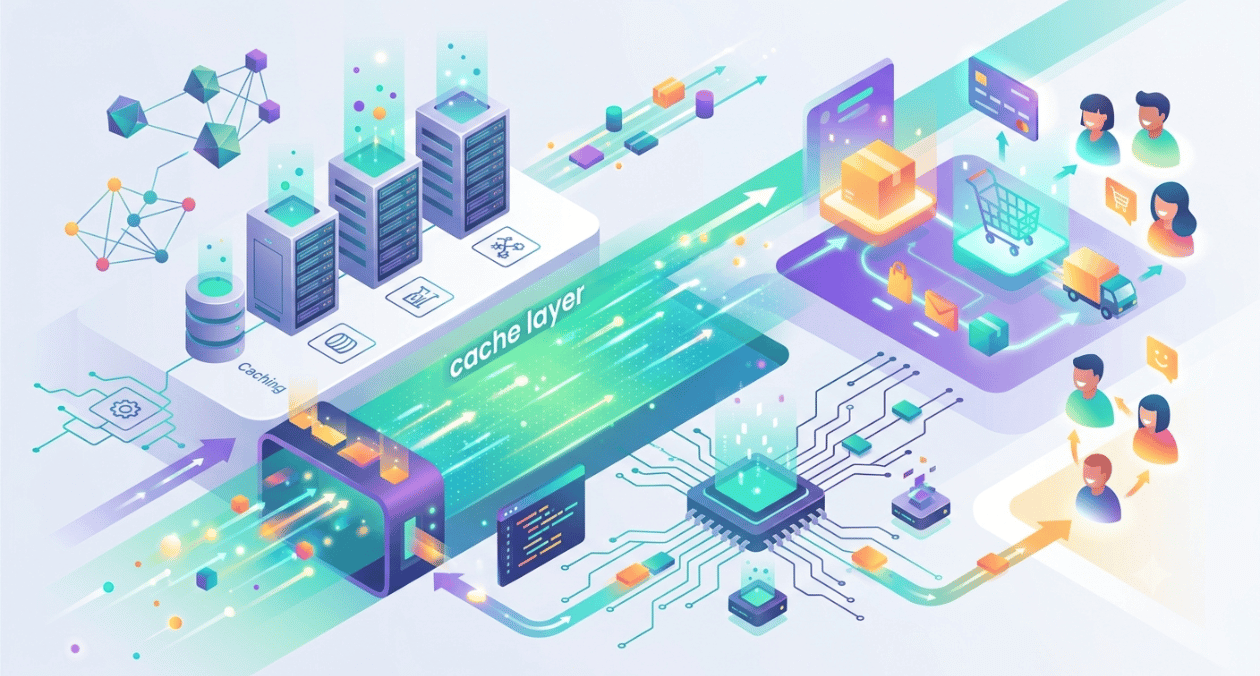
Magento Performance Tuning: Caching Layers Explained
Magento has a reputation for being resource-heavy, and while some of that is inherent to running a full-featured enterprise commerce platform, a large share...
Image Optimization for Web Performance: Formats and Compression
Ask a developer why a page feels slow, and the honest answer is often sitting right in the middle of it. A single unoptimised...
Monolith vs Microservices: Choosing the Right Architecture for Your Team
Microservices have dominated architecture conversations for years, to the point where choosing a monolith can feel like admitting you're behind the times. In practice,...
Magento Performance Tuning: Caching Layers Explained
Magento has a reputation for being resource-heavy, and while some of that is inherent to running a full-featured enterprise commerce platform, a large share...